
A ceiling fan wobbling or making an unusual noise can be annoying, but it does not always mean the fan needs to be replaced. In many cases, dust buildup, loose screws, uneven ceiling fan blades, poor blade alignment or an imbalance can cause movement and noise.
Other symptoms, such as grinding, electrical buzzing, severe shaking or a fan that stops working, can point to a motor, mounting or electrical problem that needs professional attention.
If you are wondering why my ceiling fan is wobbling or noisy, the first step is to identify what type of movement or sound you are experiencing.
This guide explains the common causes, safe troubleshooting steps and when to contact a licensed electrician in Melbourne.
Why Your Ceiling Fan Wobbling or Noisy?
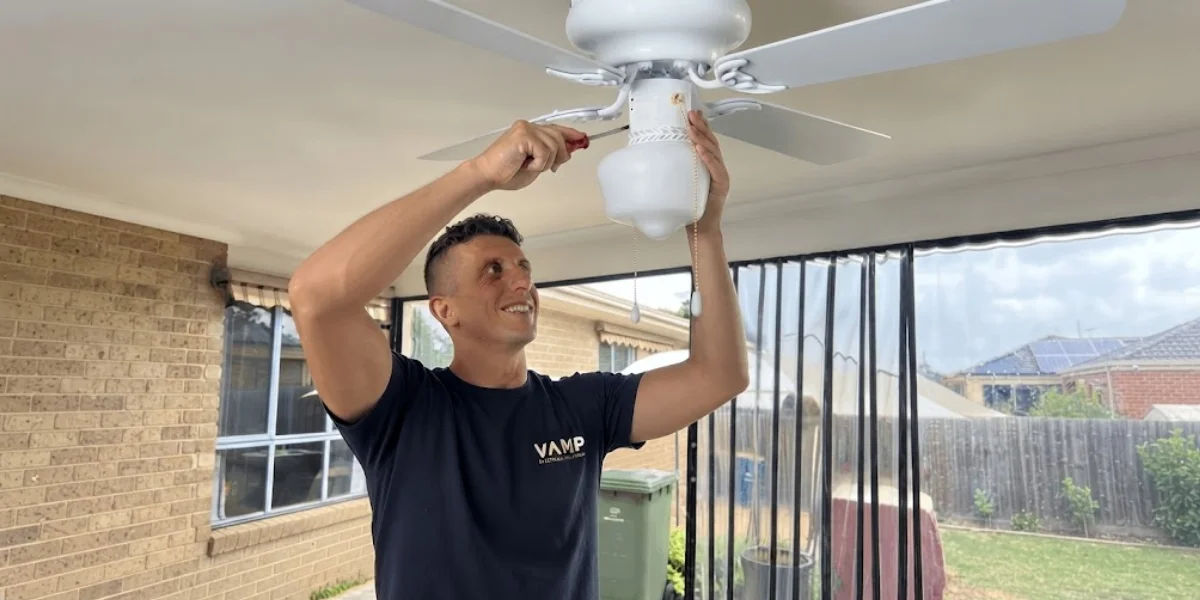
A ceiling fan can wobble or vibrate when its blades are not balanced properly or when a component has become loose. Normal operation creates movement, and over time that movement can make an existing imbalance more noticeable.
Common causes include:
- Uneven dust buildup on the blades
- Loose screws or blade fittings
- Unbalanced fan blades
- Poor blade alignment
- Bent or warped blades
- Loose blade holders
- A loose mounting bracket
- Movement around the ceiling fan mount
- Worn bearings
- Fan motor problems
Dust, Loose Screws and Blade Balance
Dust may seem harmless, but uneven buildup can add slightly more weight to one side of a fan. Because the blades rotate at speed, even a small difference can contribute to ceiling fan vibration.
Loose screws are another common cause. Vibration over time can loosen blade brackets, blade arms, light fittings or other accessible components.
If the fan blades appear undamaged but the fan shakes, checking their balance and alignment is a sensible first troubleshooting step.
Motor and Mounting Problems
Not every ceiling fan shaking problem comes from the blades.
If the entire fan moves where it connects to the ceiling, the mounting bracket or ceiling fan mount may need inspection. An incorrectly installed or insecure mounting system can create significant movement.
A fan that produces a new humming, grinding or buzzing sound may also have an issue with the fan motor or internal components such as ceiling fan bearings.
These problems are different from simple blade imbalance and may require professional assessment.
How to Fix a Wobbling Ceiling Fan
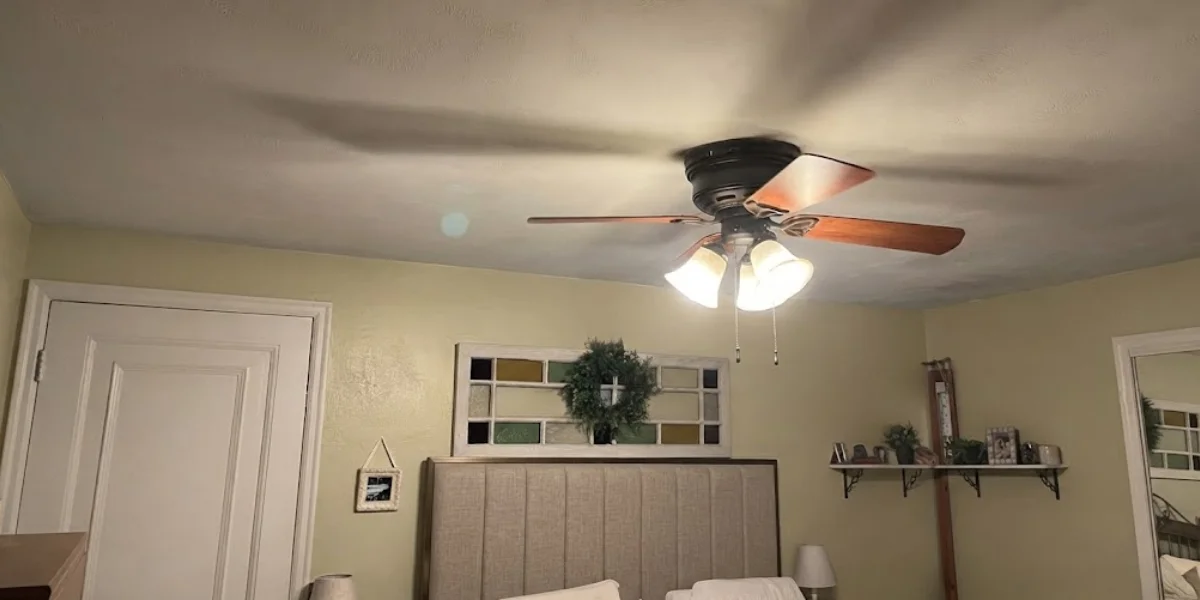
If the fan has a minor wobble and there are no obvious electrical or mounting problems, you can perform a few basic checks.
1. Switch Off the Fan and Power
Turn the fan off and allow the blades to stop completely before inspecting it. If you need to work around the fan or its electrical components, switch off the relevant power supply as well.
Never inspect moving blades or attempt to work on the fan while it is operating.
2. Clean the Ceiling Fan Blades
Clean all of the ceiling fan blades evenly using an appropriate cloth.
Pay attention to the top and bottom surfaces because uneven dust buildup can affect the balance of the rotating blades.
Once the blades are clean and dry, switch the fan back on and check whether the wobble has improved.
3. Check Accessible Screws and Fittings
With the power off, check visible screws around the blade holders and other accessible parts.
If a screw is visibly loose, it may be possible to tighten it according to the fan manufacturer’s instructions.
Do not dismantle the motor housing, ceiling mount or electrical wiring yourself.
4. Check Blade Alignment
Look at each blade from the same position and compare their height and angle.
If one blade sits noticeably higher, lower or differently from the others, the fan may have an alignment or blade problem.
Bent or warped blades should generally be replaced rather than forced back into shape.
5. Try a Fan Balancing Kit
A balancing kit can help correct a small imbalance between blades.
A typical kit uses a temporary balancing clip to identify which blade position affects the wobble, followed by a small counterweight.
If balancing does not resolve the movement, or the fan remains unstable, the issue may involve the mounting, motor or another component.
How to Fix a Noisy Ceiling Fan
A noisy ceiling fan can produce different sounds, and the type of noise can provide a useful clue.
A light rattling sound may come from a loose fitting, while persistent grinding can indicate mechanical wear. Electrical buzzing or unusual motor noise should not be ignored.
For how to fix a noisy ceiling fan, start with the simple checks that do not involve electrical components.
Make sure the blades are clean and undamaged, check accessible fittings and look for loose covers or decorative parts.
If the noise continues, identify whether it is:
- Rattling
- Clicking
- Humming
- Buzzing
- Grinding
- A change in normal motor noise
A persistent grinding sound may be associated with worn ceiling fan bearings or motor components. A humming or buzzing sound can have several possible causes, including the motor, speed control or electrical components.
Avoid opening the motor housing or attempting electrical repairs unless you are appropriately qualified to do so.
Is a Wobbling or Noisy Ceiling Fan Dangerous?
A small amount of movement does not necessarily indicate an immediate danger. Some ceiling fans can have a slight visible movement during operation, particularly at higher speeds.
However, significant or worsening movement should not be ignored.
Stop using the fan and arrange a professional inspection if you notice:
- Severe shaking
- Movement at the ceiling mount
- A loose mounting bracket
- Damaged or cracked blades
- Burning smells
- Sparks
- Overheating
- Electrical buzzing
- Persistent grinding
- Sudden changes in fan performance
A ceiling fan is attached to the ceiling and connected to the home’s electrical system. If the mounting or electrical wiring is faulty, continued operation could make the problem worse.
When there is uncertainty about the safety of the installation, switching the fan off and contacting a licensed electrician is the safer approach.
What If Your Ceiling Fan Is Not Working?
A ceiling fan not working can have several possible causes, and the solution depends on whether the problem is mechanical or electrical.
Start with basic checks such as the wall switch, remote control and remote battery. You can also check whether the relevant circuit breaker has tripped.
If the fan still does not operate, possible causes can include:
- Faulty electrical wiring
- A failed capacitor
- Motor problems
- A faulty switch
- Internal electrical components
- A circuit fault
If a circuit breaker repeatedly trips when you use the fan, do not keep resetting it and continuing to operate the fan. There may be an underlying electrical fault.
Electrical diagnosis, wiring repairs and component replacement should be handled by an appropriately qualified professional.
When Should You Call a Ceiling Fan Electrician in Melbourne?
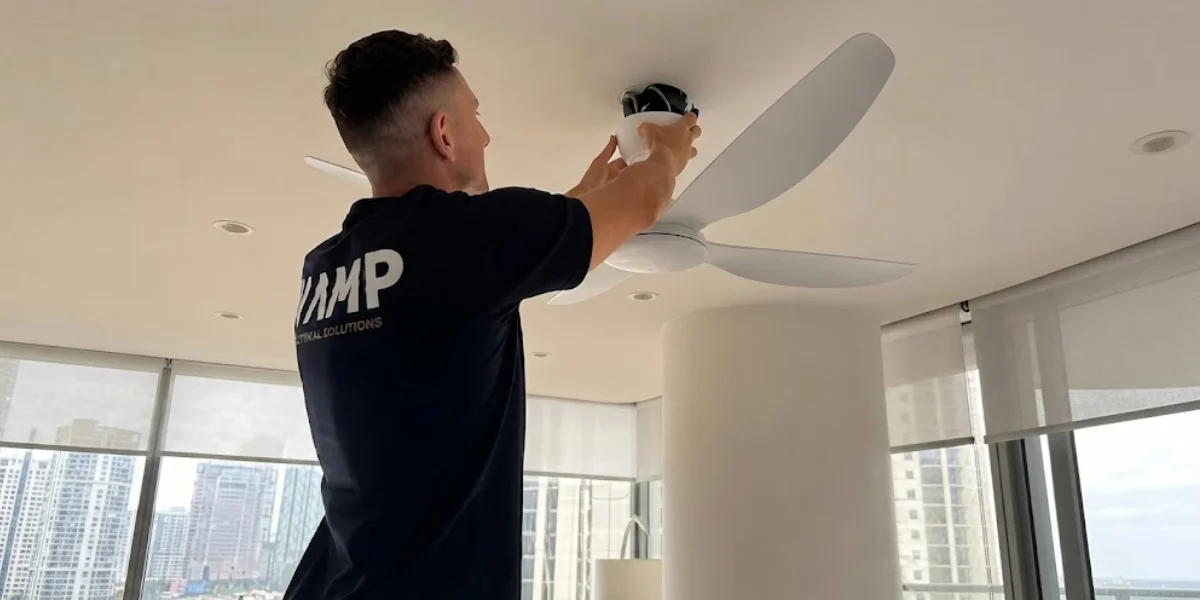
Some ceiling fan problems are suitable for simple cleaning or basic visual checks. Others require electrical knowledge, specialised equipment or access to the mounting and wiring.
You should contact a ceiling fan electrician Melbourne service when you need:
- A new ceiling fan installed
- An existing fan replaced
- Ceiling fan wiring checked
- A loose mounting system inspected
- A motor fault diagnosed
- A fan that repeatedly stops working repaired
- Persistent electrical noise investigated
- A circuit that trips when the fan operates checked
Professional ceiling fan installation is particularly important because the fan must be securely supported and correctly connected to the home’s electrical system.
If you need an electrician near you for ceiling fan installation and repair, Vamp Electrical Solutions can assess the problem and determine whether the fan needs adjustment, repair, replacement or further electrical work.
For Melbourne homeowners, using a local residential electrician also means the technician can assess the fan in the context of the home’s existing electrical installation.
Ceiling Fan Maintenance and Electrical Safety
Regular maintenance can help you notice problems before they become more serious.
Keep the blades clean, look for visible damage and pay attention to changes in vibration or noise. A fan that suddenly starts shaking, humming or making a new mechanical sound deserves attention even if it continues to operate.
Electrical safety is also important. Ceiling fans connect to the home’s electrical wiring, so installation and electrical repairs should be completed by a licensed electrician.
If an electrical issue causes a safety switch or RCD to operate, do not simply ignore it. The RCD may be responding to an electrical fault that needs investigation. Understanding the basic purpose of an RCD and its test function can also help homeowners maintain electrical safety.
You can use Testing an RCD as a separate resource when checking the operation of your home’s safety switches.
Vamp Electrical Solutions also documents our recent ceiling fan projects, showing the type of residential ceiling fan installation and electrical work that can require professional attention.
Frequently Asked Questions
How to fix a ceiling fan that wobbles and makes noise?
Turn off the fan and check for dust buildup, loose blade screws, uneven blade alignment and a loose mounting bracket. Cleaning and tightening accessible parts may resolve minor wobbling or rattling. If the fan still shakes, makes grinding noises or moves at the ceiling mount, have it inspected by a licensed electrician.
What could be causing my ceiling fan to wobble?
Common causes include unbalanced blades, loose screws, dust buildup, damaged or warped blades, poor blade alignment and a loose ceiling fan mount. If the wobble is severe or comes from the mounting point, professional inspection is recommended.
Why is my ceiling fan wobbling at high speed?
A fan may wobble at high speed when the blades are unbalanced, misaligned or damaged. Loose blade holders or mounting components can also increase vibration as the fan speed rises. Check the blades and accessible screws first, then contact an electrician if the vibration continues.
Why is my ceiling fan making a loud noise?
A noisy ceiling fan can result from loose screws, vibrating blades, motor problems, worn bearings or an insecure mounting bracket. Rattling and clicking may indicate loose components, while grinding or persistent motor noise can require professional repair.
Can a commercial electrician repair or install ceiling fans?
Yes. Vamp Electrical Solutions can install, repair and replace ceiling fans in commercial properties, including checking electrical wiring, mounting, switches and fan controls. For offices, shops, restaurants and other commercial spaces, professional installation helps ensure the fan is securely mounted and electrically connected.
Conclusion
A wobbling or noisy fan does not always need replacing. Identifying the actual cause can help determine whether simple maintenance, balancing, repair or a complete replacement is appropriate.
Vamp Electrical Solutions provides ceiling fan repair Melbourne and installation services for residential properties, including troubleshooting, electrical connections, fan replacement and related electrical work.
If you need a ceiling fan electrician Melbourne homeowners can contact for professional advice, call Vamp Electrical Solutions on 0420 102 214 to discuss the issue and arrange an assessment.