
Choosing a ceiling fan involves more than finding a design that suits your room. The motor affects how much electricity the fan uses, how it operates, which controls are available and how much you pay over its lifetime. This is why many homeowners compare AC and DC models before making a purchase.
Both types can provide comfortable airflow, but they differ in efficiency, upfront price and features. A traditional AC model may suit someone looking for a straightforward, lower-cost option, while a DC model may appeal to households that prioritise quieter operation and reduced electricity consumption.
Understanding these differences helps you make a more informed purchase and avoid paying for features you do not need. This guide explains how each motor works, compares potential running costs and outlines when professional installation is worth considering.
What Is the Difference Between AC and DC Ceiling Fans?

The main difference is the type of electrical current used by the motor. AC stands for alternating current, while DC means direct current.
An AC ceiling fan uses an alternating-current motor. These fans are widely available and often have a lower purchase price. Depending on the model, they may operate through a wall controller, pull cord or remote.
DC ceiling fans use a direct-current motor. Because Australian homes receive AC electricity, a typical DC fan includes electronic components that convert the incoming supply into the form needed by its motor. This design can deliver efficient operation, a broader range of speed settings and quieter performance.
When comparing AC and DC models, consider the ceiling fan installation cost as well as the purchase price. Installation expenses depend on whether you are replacing an existing fan, adding new wiring, modifying controls or installing suitable ceiling support.
Neither type is automatically the right choice for every home. Airflow, room dimensions, product quality, control compatibility, energy consumption and installation requirements all influence the final decision.
AC vs DC Fan: Energy Efficiency and Running Costs
Electricity consumption is one of the main reasons homeowners investigate motor technology. In general, many DC models use less power than comparable AC fans, particularly when operating at similar airflow levels. However, actual consumption varies by model and speed setting, so product specifications are more useful than broad efficiency claims.
For example, consider two fans operating for eight hours a day:
| Example specification | AC fan | DC fan |
| Illustrative power use | 70 watts | 35 watts |
| Daily electricity use | 0.56 kWh | 0.28 kWh |
| Annual use over 365 days | 204.4 kWh | 102.2 kWh |
These figures are examples, not measurements of every AC or DC model. They assume the fans run continuously at the stated power level for eight hours each day.
To estimate the annual running cost, multiply the electricity consumed in kilowatt-hours by your electricity tariff. At an illustrative rate of $0.30 per kWh, the AC example would cost approximately $61.32 annually, compared with $30.66 for the DC example. The difference would be about $30.66 per year.
Your actual savings depend on usage, speed, airflow, electricity prices and the fans being compared. If the DC model costs more to purchase, consider whether its expected energy savings justify the additional upfront expense.
Noise, Speed Settings and Everyday Comfort
A ceiling fan should circulate air effectively without becoming a distraction. This matters particularly in bedrooms, study areas and living spaces where a persistent motor hum can be noticeable.
DC motors are generally known for quiet operation and often provide more speed settings than traditional AC models. This allows users to adjust airflow more precisely, rather than choosing between a small number of fixed speeds. Nevertheless, the sound produced by the complete fan also depends on blade design, installation quality, mounting stability and maintenance.
AC models remain a practical option for many households. A well-made fan installed correctly can provide dependable airflow, and some models include remote controls and other convenient features.
Before purchasing either type, check the manufacturer’s noise information where available, the number of speed settings, the airflow rating and the available controls. A fan with a suitable airflow rating and stable installation is more useful than one selected on motor type alone.
Which Ceiling Fan Should You Choose for Your Home?

The right choice depends on how you use the room, your budget and the features you value. Comparing the complete product specification is more reliable than assuming that every fan with the same motor type performs identically.
Consider these factors when comparing models:
- Purchase budget: AC fans often cost less initially, while DC models may offer lower electricity consumption over time.
- Room usage: A fan used for many hours each day may offer more opportunity for energy savings than one used occasionally.
- Control preferences: Check whether the fan supports a remote, compatible wall controller, timer or reverse function.
- Airflow requirements: Compare the manufacturer’s airflow rating and choose a fan suitable for the room’s size and layout.
- Noise and design: Consider motor noise, blade construction, ceiling clearance and the appearance of the finished installation.
When an AC Ceiling Fan Makes Sense
An AC model may be appropriate when upfront price is a major consideration or when a straightforward control arrangement suits the household. It can also be a sensible choice for a room where the fan will be used infrequently.
Look beyond the initial price, however. Check the rated power consumption, warranty, replacement parts and available control options before deciding.
When a DC Ceiling Fan Is Worth Considering
DC models are worth comparing when the fan will operate regularly, quiet performance matters or flexible speed control is desirable. Their lower power consumption can reduce running costs, although the size of the saving depends on the particular products and usage pattern.
A higher purchase price does not automatically mean better overall value. Compare the expected electricity savings with the price difference, and consider whether the additional features are useful for your household.
Ceiling Fan Installation Cost: What Affects the Price?
The total cost of a new fan includes more than the product itself. The installation price depends on the existing electrical setup, mounting requirements, access to the ceiling and whether additional work is necessary.
Replacing an existing fan in a suitable location may be more straightforward than installing one where no fan or appropriate wiring previously existed. New wiring, switching changes, ceiling access, mounting support or work at difficult heights may affect the quote.
The motor type alone does not determine installation cost. An AC model and a DC model may involve similar installation work, but their control arrangements and manufacturer requirements can differ. Some DC fans use dedicated remotes or compatible controllers, so existing wall controls should not be assumed to work with a replacement model.
For a reliable quote, provide the electrician with the fan model, the installation location and details of the existing setup. Ask whether the price includes removal of the old fan, mounting, electrical work, testing and disposal.
If you are comparing ceiling fan installation in Melbourne, request a quote based on the actual site conditions rather than relying on a generic online estimate.
Why Professional Ceiling Fan Installation Matters
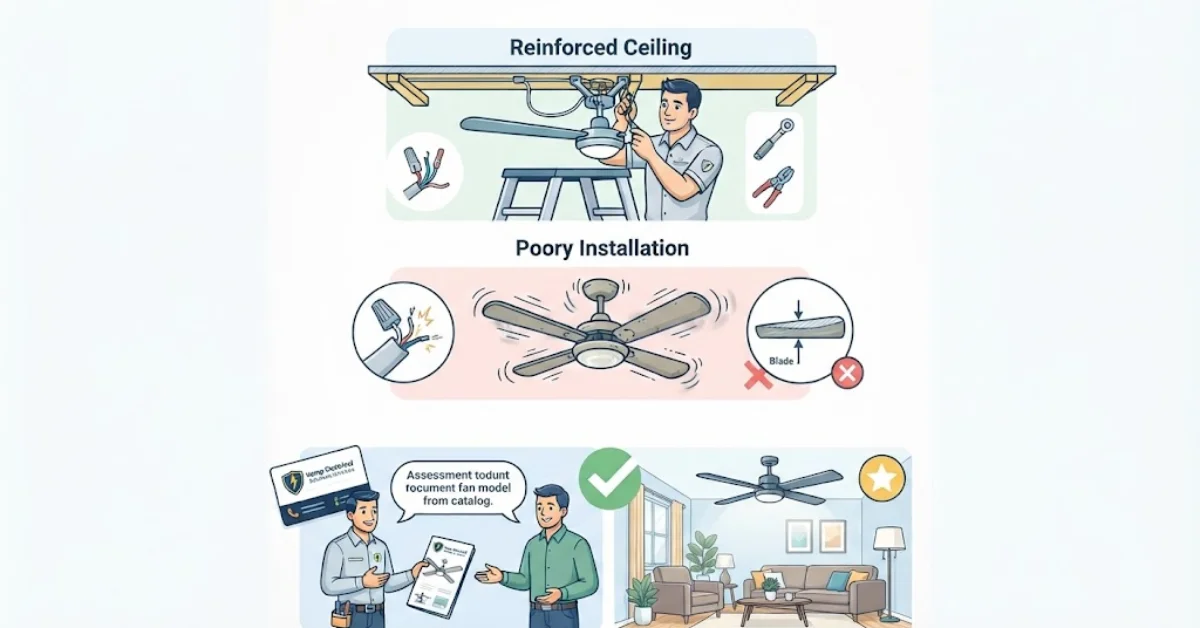
Correct installation is important for safe operation, reliable airflow and long-term performance. The ceiling structure must be suitable for the fan’s mounting requirements, and the electrical connections and controls must be compatible with the selected model.
A fan that wobbles, vibrates or makes unusual noises may have a mounting, balance or component issue that needs investigation. Persistent problems should not be ignored, particularly if the fan has become unstable or its electrical operation appears abnormal.
Vamp Electrical Solutions Services can help homeowners assess their ceiling fan installation requirements, whether they are replacing an existing unit or planning a new installation. A professional assessment can identify practical considerations before work begins and help establish the scope of the job.
Choose a suitably licensed electrician for electrical installation work, and follow the fan manufacturer’s instructions for operation and maintenance. Do not attempt electrical wiring or internal electrical repairs yourself.
Frequently Asked Questions
1. What is the main difference between AC and DC ceiling fans?
AC fans use alternating-current motors, while DC fans use direct-current motors supplied through built-in conversion electronics. DC models often use less electricity and offer more speed settings.
2. Are DC ceiling fans cheaper to run?
Many DC fans consume less electricity than comparable AC models. Actual running costs depend on power consumption, operating hours, selected speed and your electricity tariff.
3. Are DC ceiling fans quieter than AC models?
DC models are generally quieter, making them worth considering for bedrooms and study areas. However, fan quality, blade balance and correct mounting also affect noise.
4. What are DC fans best suited for?
They can suit frequently used rooms where energy efficiency, quiet operation and adjustable speeds are priorities. Check the individual model’s airflow and features before purchasing.
5. Does a DC ceiling fan need different wiring?
The installation requirements depend on the specific fan and existing setup. DC models commonly use electronic controls, so an electrician should confirm compatibility before installation.
Conclusion
Choosing between AC and DC ceiling fans comes down to balancing purchase price, electricity consumption, noise, controls and expected use. AC models can offer a lower initial cost, while DC models often provide efficient operation and more flexible speed control. Comparing actual specifications and likely running costs will help you decide which option suits your home.
Installation also deserves attention. The correct mounting, compatible controls and appropriate electrical work contribute to safe and dependable operation. If you are planning a replacement or new installation, getting professional advice can help you understand the work required before committing to a purchase.
For assistance with your ceiling fan installation requirements, contact Vamp Electrical Solutions on 0420 102 214 to discuss your project and arrange a suitable assessment.