
A safety switch and a circuit breaker are not the same thing.
A safety switch is designed primarily to protect people from electric shock. A circuit breaker protects electrical wiring from overloads and short circuits that could cause overheating or fire.
Both are important parts of a modern electrical system, and one should not be considered a replacement for the other.
If you open your switchboard and see several similar-looking switches, it can be difficult to tell what each device actually does. This guide explains the difference in simple terms, how to identify them and when you should have your switchboard checked by an electrician.
Safety Switch vs Circuit Breaker: The Quick Difference

The easiest way to understand the difference is to look at what each device protects.
| Feature | Safety Switch | Circuit Breaker |
| Main purpose | Protects people | Protects wiring and circuits |
| Detects | Current leakage | Overload and short circuit |
| Helps reduce risk of | Electric shock | Overheating and electrical fires |
| Test button | Usually yes | Usually no |
| Also called | RCD | Circuit breaker |
| Trips power | Yes | Yes |
A simple way to remember it is:
Safety switch = protects people.
Circuit breaker = protects electrical circuits.
Energy Safe Victoria explains that circuit breakers protect against short circuits and current overloads, while safety switches monitor electricity flowing through a circuit and quickly disconnect power when a potentially dangerous leakage is detected.
What Is a Safety Switch?

A safety switch is an electrical protection device designed to reduce the risk of serious electric shock.
It is also commonly called a Residual Current Device or RCD.
The device constantly monitors the electricity travelling through a circuit.
Under normal conditions, the electricity flowing into the circuit should closely match the electricity returning.
If some electricity begins flowing somewhere it should not, such as through damaged wiring, a faulty appliance or potentially a person, the safety switch detects the imbalance and disconnects the circuit very quickly.
Energy Safe Victoria states that a safety switch can disconnect electricity within approximately 0.03 seconds when a dangerous fault is detected.
What Can Cause a Safety Switch to Trip?
A safety switch may trip because of:
- A faulty appliance
- Damaged electrical wiring
- Moisture entering electrical equipment
- A damaged extension lead
- Faulty outdoor electrical equipment
- Electrical leakage from an appliance
- Problems with a power point or fitting
A trip does not automatically mean the safety switch itself is faulty.
It may be doing exactly what it is supposed to do by detecting a problem elsewhere in the electrical system.
If the safety switch repeatedly trips after being reset, avoid repeatedly forcing it back on. An electrician should identify what is causing the fault.
What Is a Circuit Breaker?

A circuit breaker protects an electrical circuit when too much electrical current flows through it.
Every electrical circuit is designed to safely carry a certain amount of current.
If the current becomes too high, cables can heat up. Excessive heat can damage insulation, electrical fittings and surrounding materials.
The circuit breaker detects excessive current and disconnects the power before the wiring becomes dangerously overloaded.
What Can Cause a Circuit Breaker to Trip?
Common causes include:
- Too many appliances operating on one circuit
- A short circuit
- A faulty appliance
- Damaged wiring
- An overloaded power circuit
- Electrical equipment drawing excessive current
For example, running several high-powered appliances from the same circuit may exceed what that circuit was designed to handle.
The circuit breaker can then trip to protect the wiring.
Resetting the breaker may temporarily restore power, but frequent tripping should be investigated rather than ignored.
Why You Need Both Safety Switches and Circuit Breakers
Safety switches and circuit breakers respond to different electrical problems.
Imagine someone touches faulty electrical equipment and electricity begins leaking through an unintended path.
The amount of current may be too small to trigger a normal circuit breaker, but it could still be dangerous to a person.
A safety switch is designed to detect that leakage.
Now consider a different situation where too many appliances are drawing power from the same electrical circuit.
There may be no leakage current at all. Instead, the circuit is simply carrying more electricity than it should.
That is the type of problem a circuit breaker is designed to detect.
This is why modern electrical protection uses both functions.
What Is an RCBO?
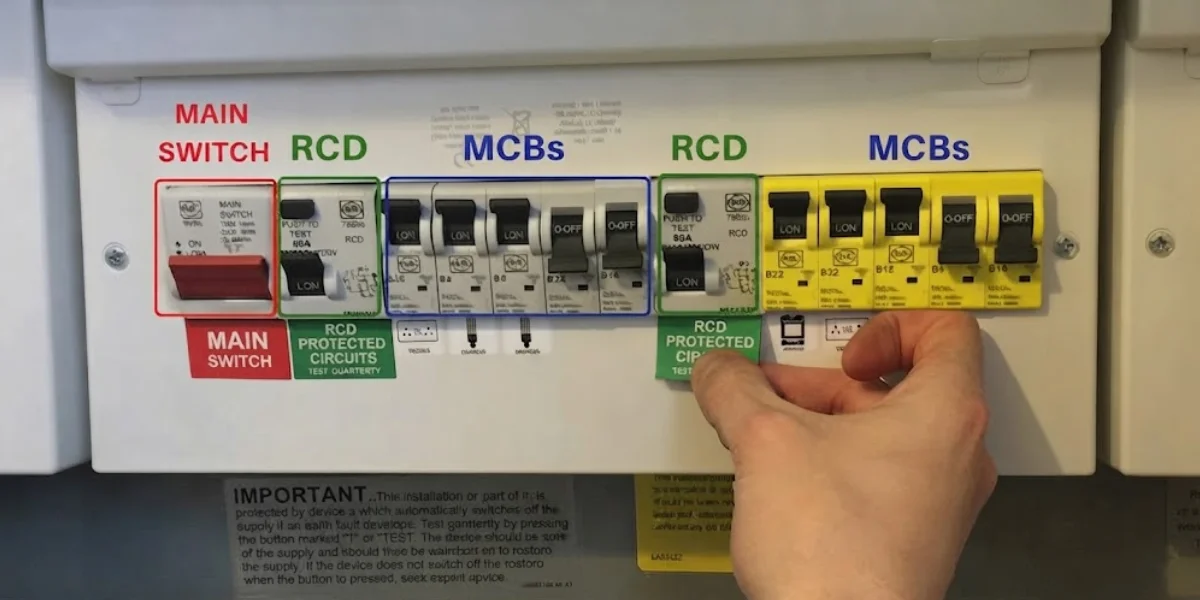
You may also see the term RCBO when looking at your switchboard.
An RCBO combines the functions of a safety switch and circuit breaker into one device.
RCBO stands for Residual Current Circuit Breaker with Overcurrent Protection.
It can provide:
- Residual current protection
- Overload protection
- Short-circuit protection
This means one device can protect the circuit against excessive current while also providing RCD protection against electrical leakage.
RCBOs are commonly used in modern switchboards because individual circuits can have their own protection.
One advantage is fault isolation.
If one circuit develops a problem, the affected RCBO can trip without necessarily disconnecting several unrelated circuits at the same time.
If you are considering a switchboard upgrade in Melbourne, an electrician can assess your existing protection and determine whether RCBOs or other upgrades are appropriate for the installation.
How Can You Tell a Safety Switch From a Circuit Breaker?
The easiest thing to look for is a test button.
Safety switches normally have a button marked:
- TEST
- T
- Test
Energy Safe Victoria also notes that safety switches may have 30mA marked on them.
Standard circuit breakers generally do not have the same test button.
They are often marked with an amperage rating such as:
- 10A
- 16A
- 20A
- 32A
However, modern RCBOs combine both functions and can therefore have characteristics associated with both devices.
If your switchboard labels are unclear, damaged or missing, do not rely only on appearance.
A licensed electrician can identify what protection is installed and which circuits each device protects.
Does Having Circuit Breakers Mean You Have Safety Switch Protection?
No.
This is an important distinction for owners of older homes.
A switchboard can contain circuit breakers but still have incomplete or missing RCD safety switch protection.
Circuit breakers may protect the wiring from excessive current while providing no dedicated residual-current protection for people.
Energy Safe Victoria specifically states that circuit breakers and fuses do not act as safety switches for personal protection against electric shock.
This is particularly worth checking in older Melbourne properties where electrical systems may have been modified gradually over many years.
What About Old Ceramic Fuses?
Some older homes still have switchboards containing ceramic or rewireable fuses.
A fuse performs an overcurrent protection function by breaking the circuit when excessive current passes through it.
However, an old fuse board may not provide the level of protection found in a modern switchboard with circuit breakers and RCDs.
Older homes may also contain wiring that has deteriorated or was designed for much smaller electrical loads.
Energy Safe Victoria advises that homes built before the 1980s should have their wiring checked because ageing wiring can become unsafe or struggle with modern electrical demand.
Common signs your switchboard deserves an inspection include:
- Ceramic fuses
- Missing safety switches
- Frequent tripping
- Burning smells
- Buzzing from the switchboard
- Scorch marks
- Warm electrical equipment
- Unlabelled circuits
- Not enough switchboard space
- Repeated electrical faults
You can read our Melbourne switchboard upgrade cost guide if you are trying to understand what replacing an older board may involve.
Are Safety Switches Required in Victoria?
Electrical requirements depend on the type of property and work being performed, so homeowners should avoid assuming the same rule applies to every existing installation.
Safety switches are compulsory on new residential electrical installations in Victoria.
Requirements can also apply when electrical installations are altered or a switchboard is replaced.
Victorian rental properties have additional requirements.
Consumer Affairs Victoria states that rental properties must have modern switchboards with circuit breakers and electrical safety switches.
For relevant rental properties, power outlets and lighting circuits must be connected to both appropriate circuit-breaker protection and residual-current protection.
Rental providers are also required to arrange periodic electrical safety checks in accordance with Victorian rental requirements.
If you own or manage a rental property, having the switchboard assessed by a licensed electrician is a better approach than trying to determine compliance by looking at the switches yourself.
How Often Should You Test a Safety Switch?
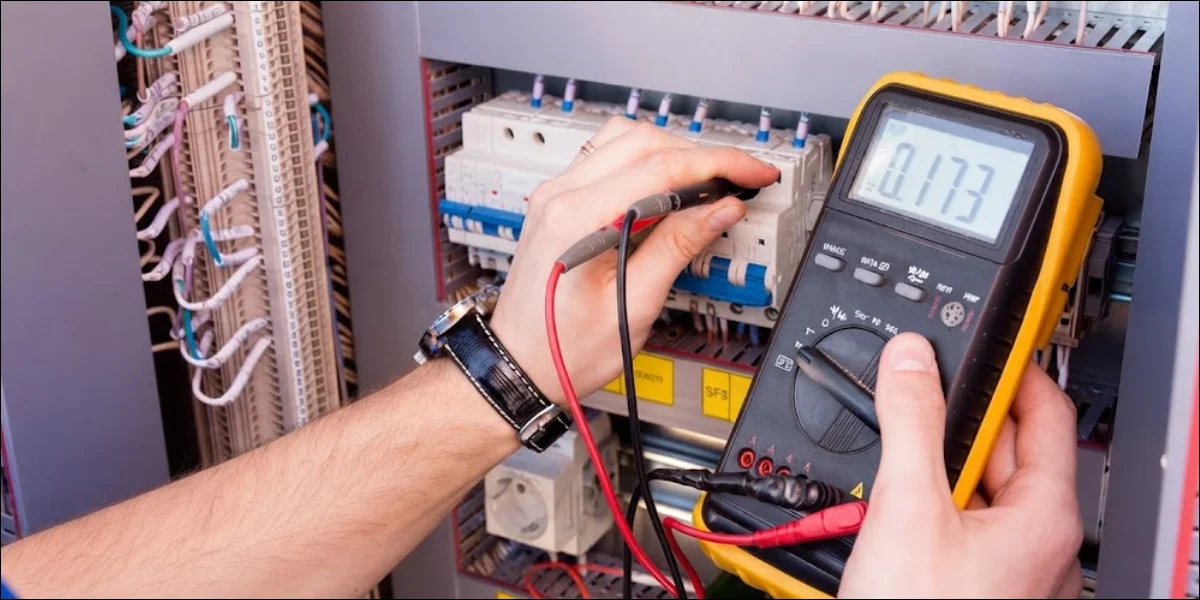
A safety switch needs to operate correctly when it is needed.
Energy Safe Victoria currently recommends testing safety switches every three months.
Before testing:
- Tell everyone in the property that the power will temporarily turn off.
- Locate the safety switch test button.
- Press the TEST or T button.
- The switch should trip into the off position.
- Check that electricity has disconnected from the circuit being tested.
- Reset the switch after completing the test.
If pressing the test button does not trip the safety switch, contact a licensed electrician.
Do not open the switchboard enclosure or attempt electrical repairs yourself.
Pressing the normal test button is different from performing electrical work inside the switchboard.
Why Does My Safety Switch Keep Tripping?
A safety switch that repeatedly trips is usually reacting to an electrical fault or current leakage.
One useful first observation is when the problem occurs.
For example, if the safety switch trips every time a particular appliance is connected, that appliance could be contributing to the fault.
Problems may also appear only during wet weather if moisture is entering outdoor electrical fittings.
Other faults are less obvious and may involve cables inside walls, power points or circuits.
Repeated tripping should not simply be treated as an inconvenience.
An electrician can perform electrical fault finding to determine whether the problem comes from an appliance, wiring, circuit or protective device.
For ongoing faults, Vamp Electrical Solutions provides residential electrical services across Melbourne including maintenance, fault finding, switchboard work and electrical safety checks.
Why Does My Circuit Breaker Keep Tripping?
Repeated circuit breaker trips usually indicate excessive current or an electrical fault.
Common examples include:
Circuit overload: Too many electrical appliances are operating on one circuit.
Short circuit: Conductors that should remain separate come into contact and create a very high current.
Faulty equipment: An appliance or fitting has developed an electrical problem.
Damaged wiring: Cable damage or deteriorated insulation may create abnormal electrical conditions.
Do not install a higher-rated breaker simply because the existing breaker trips frequently.
Circuit breakers are selected according to the electrical installation and cable capacity.
Installing incorrect protection could allow wiring to carry more current than it can safely handle.
A licensed electrician should identify why the breaker is tripping before making changes.
Safety Switch and Circuit Breaker Costs in Melbourne
The cost depends heavily on whether you need one protective device replaced or a larger switchboard upgrade.
As a general guide, standalone RCD or safety-switch installation may cost a few hundred dollars depending on access, the switchboard and the work required.
A complete switchboard upgrade is a much larger project.
Our current Melbourne electrical upgrade cost guide places smaller electrical safety upgrades from several hundred dollars, while complete residential switchboard upgrades can range from approximately $1,000 to $3,500+ depending on the installation.
Factors that can change the price include:
- Number of circuits
- Existing switchboard condition
- Existing wiring
- Number of RCDs or RCBOs required
- Single-phase or three-phase supply
- Electrical faults found during testing
- Switchboard enclosure condition
- Additional circuits
- Certification and inspection requirements
The safest approach is to have the existing switchboard inspected before relying on a generic online price.
When Should You Call an Electrician?
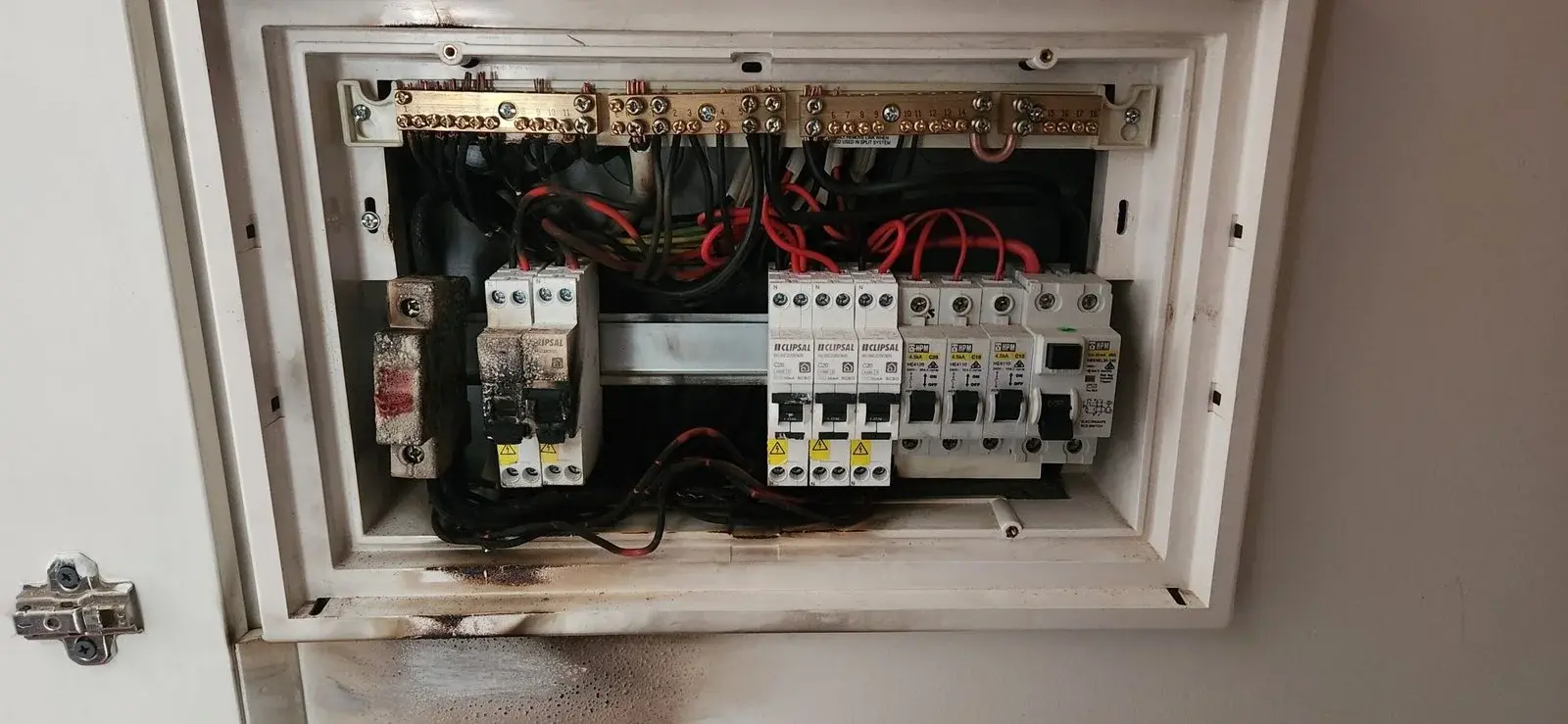
Arrange an electrical inspection if you notice:
- A safety switch that will not reset
- A safety switch that fails its test
- Circuit breakers repeatedly tripping
- Ceramic fuses
- No visible safety switches
- Burning smells
- Buzzing or crackling sounds
- Scorch marks
- Warm or damaged switchboard components
- Regular power loss
- Electrical shocks or tingling from equipment
Burning smells, visible damage or electrical shocks require particular caution.
Avoid touching damaged electrical equipment and have the problem assessed as soon as possible.
Frequently Asked Questions
Is a safety switch the same as a circuit breaker?
No. A safety switch, also called an RCD, is designed to protect people from electric shock by detecting electrical leakage. A circuit breaker protects wiring and electrical circuits from overloads and short circuits.
What is the difference between a safety switch and a circuit breaker?
The main difference is what they protect. A safety switch protects people by detecting current leaking to earth, while a circuit breaker protects electrical wiring from excessive current, overloads and short circuits.
How do I know if I have a safety switch?
Check your switchboard for a device with a “T” or “Test” button. Safety switches normally include a test button, while standard circuit breakers generally do not.
Why does my safety switch keep tripping?
A safety switch may keep tripping because of a faulty appliance, damaged wiring, moisture in electrical equipment or current leakage. If it continues to trip after appliances are disconnected, have the circuit checked by a licensed electrician.
Can a safety switch replace a circuit breaker?
Not by itself. Safety switches and circuit breakers perform different jobs. However, an RCBO combines RCD safety-switch protection with circuit-breaker protection in one device.
Conclusion
A safety switch and circuit breaker may sit beside each other in your switchboard, but they protect against different electrical risks.
The simplest distinction is that safety switches help protect people from electric shock, while circuit breakers protect electrical circuits from overloads and short circuits.
Modern protection may also use RCBOs that combine both functions.
If you are unsure what protection your switchboard currently has, especially if your home has ceramic fuses, older wiring, missing test buttons or frequently tripping circuits, have the electrical system inspected instead of guessing.
Vamp Electrical Solutions provides residential electrical services, safety checks, fault finding and switchboard upgrades across Melbourne.
For advice about your safety switches, circuit breakers or switchboard, call on 0420 102 214 to arrange an assessment.