
A good ceiling fan can make your bedroom more comfortable throughout the year. It should move air well, run quietly, and suit the size of your room. The design matters too, but looks should not be your only concern.
There are many models to choose from. Some have timber blades, while others use plastic or metal. You can also find fans with built-in lights, remote controls, and several speed settings.
So, how do you choose the right one?
Start by checking your room size, ceiling height, and airflow needs. Then compare the fan’s features, running costs, warranty, and installation requirements. This guide will help you compare your options and make a confident buying decision.
What Should You Look for in a Bedroom Ceiling Fan?

A bedroom fan should provide steady airflow without causing too much noise. This matters when you use it at night or while resting.
Start with the motor and speed settings. A good range of speeds lets you adjust the airflow to suit the weather. Lower settings may be more comfortable while sleeping.
Noise is another key factor. Check the product details and read customer reviews before buying. Look for comments about humming, rattling, or wobbling. These issues can affect comfort.
You should also think about how you want to control the fan. A remote can be useful when you are lying in bed. Wall controls may suit people who prefer a fixed switch.
Some models include a light. This can be helpful if you have limited ceiling space. However, check the brightness and colour options before making a choice.
Before choosing a model, consider the installation requirements and overall budget. This guide to ceiling fan installation costs can help you understand the potential expenses involved.
The best ceiling fans are not always the most expensive. Focus on the features you will use every day.
How Do You Choose the Right Fan Size?
The right size helps spread air across your bedroom. A fan that is too small may not provide enough airflow. A model that is too large may not suit the room or its ceiling.
First, measure the length and width of your bedroom. Multiply these numbers to find the floor area in square metres. Then compare the result with the room-size guide provided by the manufacturer.
Many standard bedrooms can suit a fan with a blade span of around 122–132 cm. Smaller rooms may need a smaller model. Larger bedrooms may benefit from a wider fan with suitable airflow.
These figures are a starting point, not a fixed rule. Always check the manufacturer’s recommendations.
Understanding ceiling fan measurements
When comparing products, pay attention to the listed dimensions. The ceiling fan width usually refers to the distance from one blade tip to the opposite tip. This measurement is also known as the blade span.
Check the total height of the fitting as well. Some models hang lower because of their motor housing or light. Others have a low-profile design for rooms with limited ceiling height.
The phrase standard ceiling fan size can be useful when researching products. However, there is no single size that suits every bedroom.
Measure your room before you order a fan. Also check the distance between the blades, walls, lights, and other fittings. These details can help you avoid buying a model that does not fit.
Which Features Are Worth Paying For?
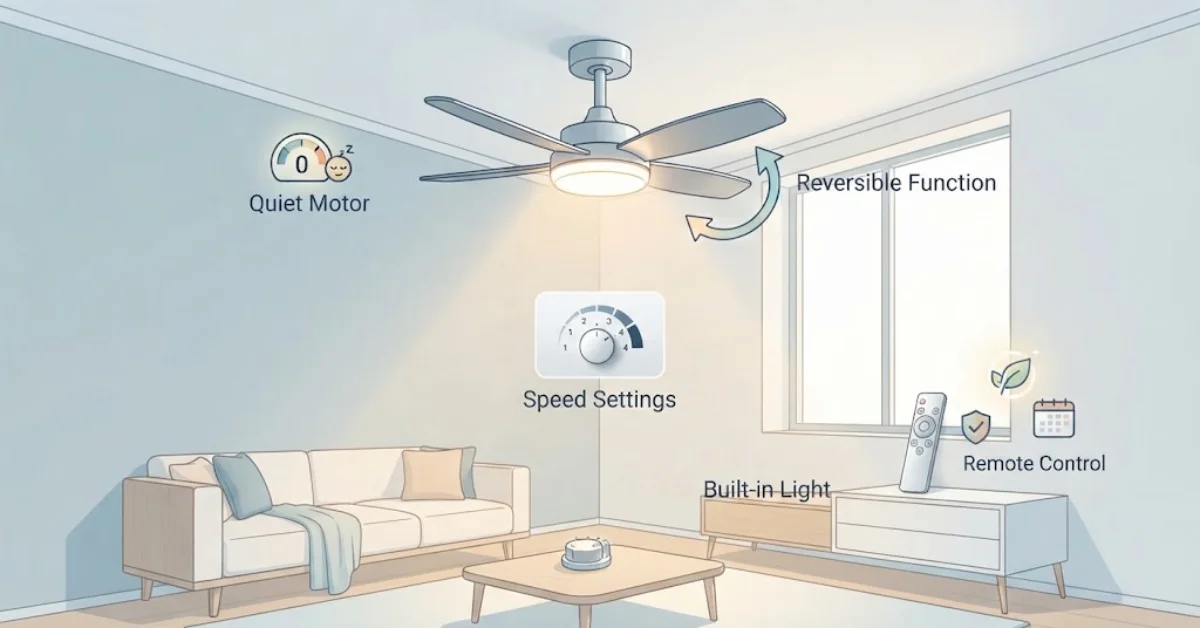
Once you know the size you need, compare the features. Choose options that improve comfort or make daily use easier.
Here are six useful features to consider:
- Quiet motor: Look for clear noise information and reliable customer feedback.
- Speed settings: Multiple speeds give you more control over airflow.
- Remote control: This can make the fan easier to use from bed.
- Built-in light: A combined fitting may suit rooms with limited ceiling space.
- Reversible function: Some models can help circulate warm air during cooler months.
- Warranty support: Check the cover period and the availability of replacement parts.
Energy use is also worth checking. Compare the rated power of each model and consider how many hours you expect to run it.
Running costs depend on the fan, selected speed, hours of use, and your electricity tariff. A higher purchase price may be worthwhile if the model better suits your needs. However, compare the actual specifications before making that decision.
If you are comparing AC and DC motors, consider the purchase price, controls, efficiency, and expected use. Our separate guide, AC vs DC Ceiling Fans: Key Differences, Costs & Benefits, can help you explore that choice in more detail.
Which Blade Material Suits Your Bedroom?
Blade material affects the fan’s appearance, weight, and care needs. Your choice should also suit the room’s design.
Plastic blades are often lightweight and easy to clean. They come in many colours and styles. A well-made model can be a practical choice for a modern bedroom.
Timber blades offer a natural look. They can complement wooden furniture, warm colours, and simple interiors. Check the care instructions before buying.
Metal blades can suit industrial or contemporary spaces. Their appearance may appeal to people who prefer a clean, modern finish.
No material is best for every home. Blade shape, pitch, motor design, and overall construction also affect performance.
Consider the lighting before choosing a model. A fan with a built-in light can reduce the need for a separate ceiling fitting. Check its brightness, colour temperature, and replacement options. If you prefer bedside lamps, a fan without a light may be a better fit.
It is also worth considering how long your fan may last. Read our guide to the lifespan of a ceiling fan for more information about durability, maintenance, and factors that can affect its working life.
How Can You Compare Brands, Prices, and Reviews?
Comparing products can help you find a fan that suits your budget. Start with the features you need, then compare similar models.
If you are browsing Beacon Lighting fans, review the dimensions, airflow ratings, motor details, and warranty for each product. You can also compare options at Bunnings. Retailer availability may change, so check current product details before purchasing.
Do not choose a fan based on its star rating alone. Read reviews that explain how the product performs in everyday use.
Look for repeated feedback about noise, airflow, remote controls, and long-term reliability. A detailed review can tell you more than a short comment with no explanation.
Before buying, check these details:
- Product price and any extra accessories.
- Room size and blade span.
- Noise and airflow information.
- Warranty terms and spare parts.
- Delivery, returns, and installation costs.
A lower-priced model may meet your needs. A more expensive option may offer features that matter to you. Compare the total cost rather than focusing on the price tag alone.
What Ceiling Height and Installation Requirements Matter?
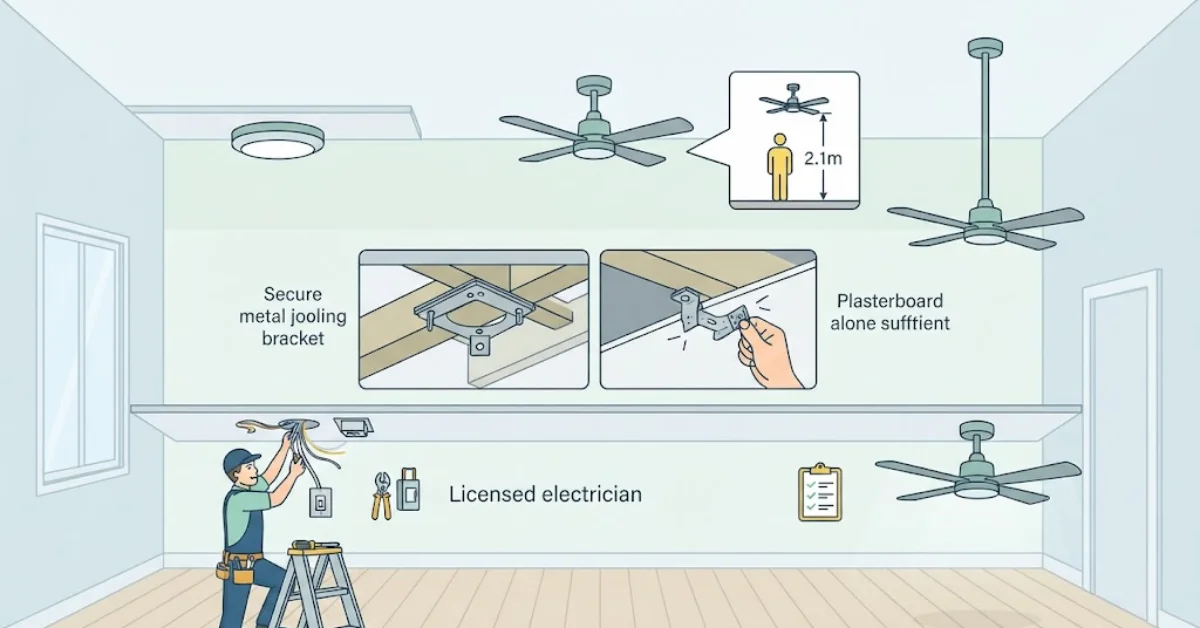
Your ceiling height affects which fan you can install. The mounting point and available clearance matter too.
Low ceilings may suit a low-profile fan. Higher ceilings may allow a model with a suitable extension rod. Sloped ceilings may need a compatible mounting system.
In Australia, the blades generally need to be at least 2.1 metres above the finished floor. Check the applicable requirements and the manufacturer’s instructions before installation.
The ceiling must also support the weight and movement of the fan. Standard plasterboard alone is not a suitable mounting point unless the installation system provides the required structural support.
Electrical work needs careful attention. Installing a new fan may involve wiring, mounting, controls, or changes to an existing fitting. A suitably licensed electrician should carry out the electrical installation.
If you are still comparing motor types before choosing a model, read our guide to AC vs DC ceiling fans to understand their differences, costs, and benefits.
Professional help can also identify clearance or mounting issues before work begins.
For homeowners in Melbourne, it is worth asking for a clear installation quote. Check whether the price includes the fan, labour, mounting work, and any extra electrical work. This makes it easier to compare quotes and plan your budget.
Frequently Asked Questions
What is the best size ceiling fan for a bedroom?
Many standard bedrooms can suit a fan with a blade span of around 122–132 cm. The right size depends on the room area, ceiling height, and product specifications.
Are larger ceiling fans better?
Not always. A larger fan may move air across a wider area, but it must suit the room and ceiling. Compare airflow ratings and manufacturer guidance before choosing.
Are plastic ceiling fans suitable for bedrooms?
Yes, many plastic-blade models are suitable for indoor use. Compare their construction, noise levels, airflow, and warranty before buying.
Should I buy a ceiling fan with a light?
A fan with a light can be useful when you want both features in one fitting. Check the light output, colour options, and replacement arrangements first.
Do I need an electrician to install a ceiling fan?
Electrical installation should be completed by a suitably licensed electrician. The installer can check the wiring, mounting point, and clearance requirements.
Conclusion
The right bedroom fan should suit your room, provide steady airflow, and fit your daily routine. Measure your room before choosing a fan. Then compare noise levels, controls, blade materials, and warranty coverage to find a model that offers lasting value.
If you need help with a new ceiling fan or a replacement, Vamp Electrical Solutions can assist with your electrical installation needs. Call 0420 102 214 to discuss your project and arrange professional assistance.