
A comfortable workplace helps people work and shop with ease. Good airflow can make a warm room feel more pleasant. It can also help reduce the need to run air conditioning all day.
But choosing a fan for a business takes care. An office has different needs from a shop or workshop. The right choice depends on room size, ceiling height and daily use.
Commercial ceiling fan installation also needs safe mounting and proper wiring. This guide explains what to check before you buy a fan. It also shows when to seek help from a qualified electrician.
Check Your Business Needs Before You Buy
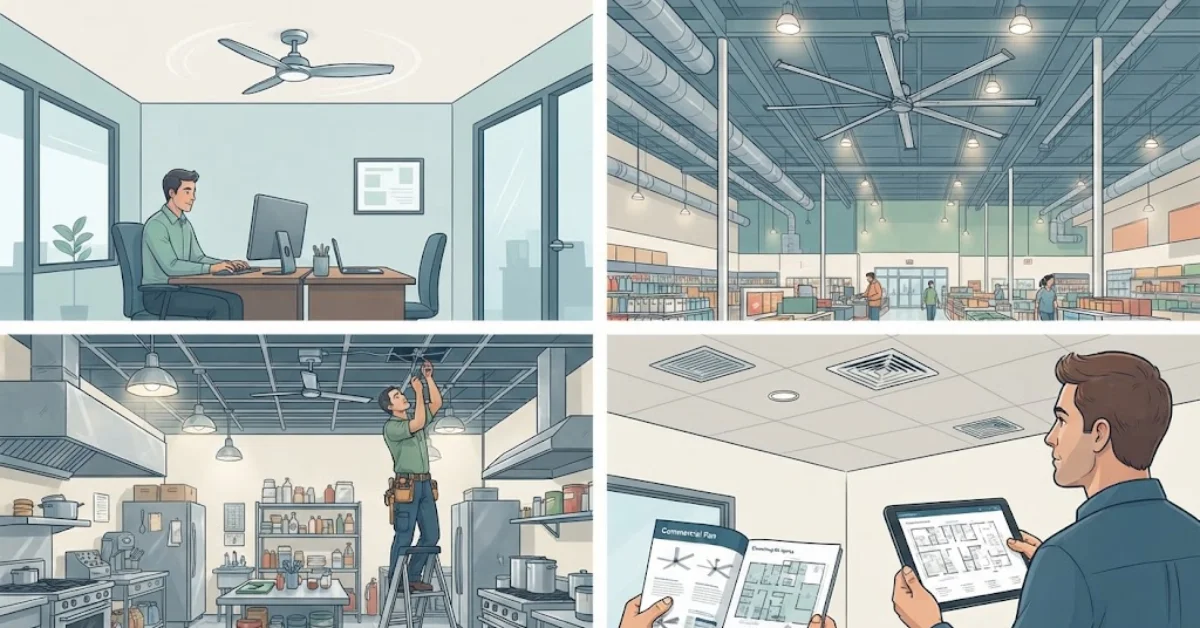
Start by looking at the room where you plan to install the fan. Think about how people use the space each day.
A small office may need quiet airflow. A large shop may need air to reach more areas. A workshop may need a fan made for high ceilings.
Room size is only one part of the choice. Shelves, lights and walls can also affect airflow. The ceiling must have a safe place to hold the fan.
Before you choose a model, check these points:
- Room size: Measure the area that needs airflow.
- Ceiling height: Check the space needed for safe mounting.
- Room layout: Look for lights, shelves and other barriers.
- Daily use: Work out how many hours the fan will run.
- Existing systems: Check how the fan will work with your current cooling and ventilation.
These checks help you avoid buying the wrong fan. They also help your electrician plan the work.
Choose the Right Commercial Ceiling Fan
A commercial ceiling fan should suit the room and the work done there. A large fan is not always the best choice. Its size, airflow and mounting needs must match the space.
Offices often need quiet fans. Shops may need airflow across customer areas. Workshops may need fans built for larger spaces.
Style can also matter, especially in customer-facing areas. Yet looks should not come before safety and performance.
For ideas about fan styles, read our guide to the best ceiling fans for bedrooms. This article focuses on homes, but it may help you compare common fan designs.
For advice on business use, see this guide to choosing a commercial ceiling fan.
Check the fan’s size, airflow and rated use before you buy. If your room has a high ceiling, ask an electrician to assess the space.
Match Fan Airflow to the Room
A fan needs to move enough air to improve comfort. Its size alone does not tell you how well it will work.
Blade design, motor type and fan speed all affect airflow. The height of the fan also matters.
Check the airflow figures listed by the maker. Use them to compare models with similar sizes and uses. Also check the room size each model is made to suit.
A meeting room may need gentle airflow. A large open space may need more than one fan. The best setup depends on the room and how people use it.
Shelves, walls and machines can block moving air. Keep these in mind when planning fan placement.
Do not assume that one large fan will always work best. A few smaller fans may suit some rooms better. Ask a qualified professional if you are unsure.
Decide If You Need a Fan with a Light
Some rooms need both light and airflow. A ceiling light and fan can be a useful choice when one fitting can meet both needs.
A remote ceiling fan with light may let staff change the fan speed and light settings with ease. Check the controls and light output before you buy.
A reception area may suit a fan with a built-in light. An office with a good lighting system may only need a fan.
A basic ceiling fan may be enough if you do not need extra features. Choose a model that fits the job rather than paying for features you will not use.
If you buy a ceiling fan online, check the size, warranty and parts included. Make sure the model suits your business space.
Also check that the fan can be mounted and wired safely. A low price is not the only thing that matters.
Compare Motor Types and Energy Use

A fan motor affects power use, noise and speed control. The best choice depends on the model and how often you use it.
A DC fan ceiling model may use less power than some other models. It may also offer more speed settings. However, performance varies between products.
Read our guide to AC vs DC ceiling fans to learn more about the main differences.
Think about how long the fan will run each day. A fan used all day may have a bigger effect on power bills than one used for short periods.
Check these details before you buy:
- Power use: Check the rated wattage.
- Noise: Choose a fan that suits the room.
- Speed settings: Make sure the controls meet your needs.
- Cleaning: Check how the fan can be cleaned and checked.
- Warranty: Read the terms before you buy.
These checks help you compare value over time. The cheapest fan may not be the best choice for your business.
Check Mounting and Electrical Safety
A good fan still needs a safe installation. The ceiling support, wiring and mounting point must suit the model.
An electrician should check the ceiling and the power supply. They should also check the space around the fan.
Do not assume that an old light fitting can hold a new fan. The mounting point must be suitable for the new unit.
Plan the work around your business hours where possible. This can help reduce delays in shops and offices.
Before work starts, ask what the quote includes. It may cover removal of the old fan, new wiring, controls and final testing.
Use a suitably licensed electrician for electrical work. This helps ensure that the fan is fitted and tested to the required standards.
Keep the Fan Clean and Well Maintained
Regular care can help a fan work as it should. Follow the maker’s advice for cleaning and checks.
Dust can build up on fan blades. Grease and moisture may also be a concern in some work areas. The right care plan depends on where the fan is used.
Watch for changes in how the fan runs. Unusual noise, shaking or weak airflow may mean it needs a check.
Ask a qualified professional to inspect the fan if you notice a problem. Do not ignore signs of damage or electrical faults.
Keep the product details and warranty in a safe place. These records can help if the fan needs repair.
High fans need safe access for checks and cleaning. Plan this work before a problem occurs.
Know When to Replace an Old Ceiling Fan
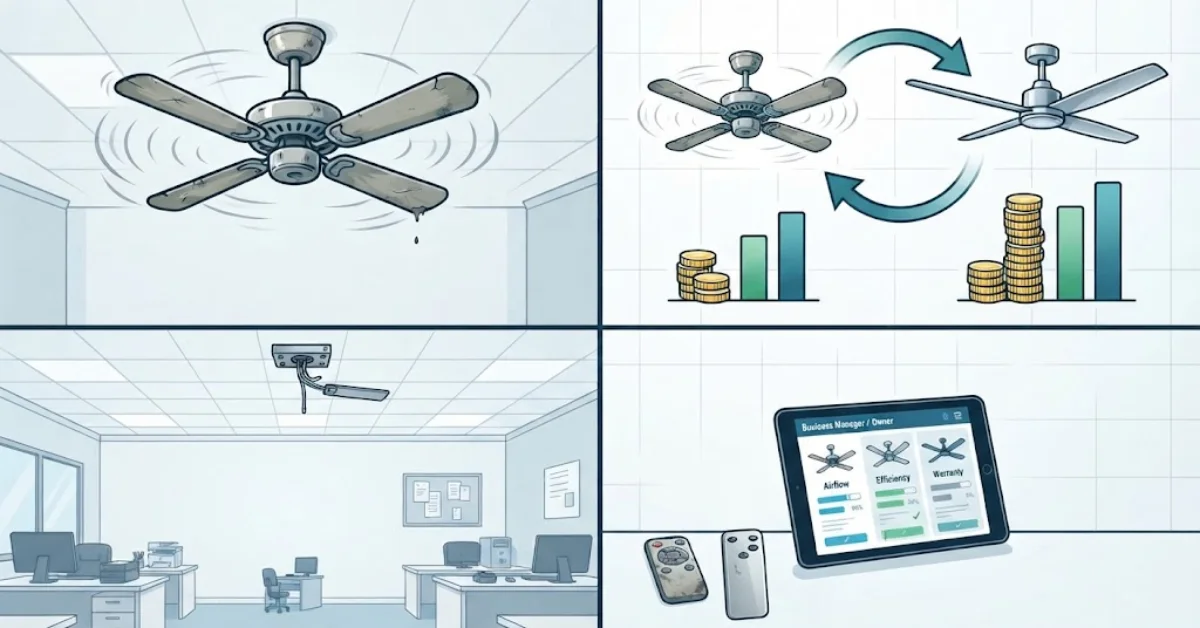
An old fan may no longer meet your business needs. It may make noise, move less air or have controls that no longer work well.
These signs do not always mean you need a new fan. A repair may be enough. The best choice depends on the fault and the cost of repair.
Read our guide to the lifespan of a ceiling fan for more details.
Before you replace a fan, check your current needs. Your room layout may have changed. You may also need better airflow or new lighting.
Use this chance to check the mounting point and wiring. Compare the cost of repair with the cost of a new model.
A qualified electrician can help you assess the options. This can help you make a sound choice for your business.
Frequently Asked Questions
What should I check before installing a commercial ceiling fan?
Check the room size, ceiling height, airflow and mounting point. Make sure the fan suits the way you use the space.
Can I use a home ceiling fan in a business?
It depends on the model and the room. Check its ratings and intended use before you buy it for a business.
Can I use a ceiling fan in a commercial kitchen?
The right choice depends on heat, grease and moisture. A ceiling fan does not replace the ventilation needed for cooking.
Is a fan with a light a good choice?
It can be useful when you need both light and airflow. Check the light output, controls and cost before you buy.
How can I check a fan’s running cost?
Check the rated power use and how many hours the fan will run. Actual power use depends on the speed and daily use.
Conclusion
The right commercial ceiling fan can help make a workplace more comfortable. Start by checking the room size, ceiling height and daily use. Then compare airflow, power use, lighting and installation needs.
Safe mounting and proper wiring matter just as much as the fan itself. Regular checks can also help you spot problems early.
Vamp Electrical Solutions can help you discuss your electrical needs and plan your next step. Call 0420 102 214 to ask about your project.