
A ceiling fan should help keep your room comfortable without making too much noise or causing concern. Over time, parts can wear out. Airflow may drop, controls may stop working, or the fan may begin to shake during use.
Some problems can be fixed with a repair. Others may mean it is time to install a new ceiling fan. Knowing the difference can help you plan the work and avoid spending money on a fan that no longer meets your needs.
In this guide, we explain the main signs that your ceiling fan may need replacing, what to check first, and when to contact a licensed electrician.
Your Ceiling Fan No Longer Moves Enough Air

One of the first signs of a problem is weak airflow. You may notice that the fan spins but does not make the room feel as comfortable as it once did.
Several issues can cause this. Dust may have built up on the blades. The blades may be loose or out of balance. The motor may also have lost performance over time.
Start by checking for visible dust and making sure the fan is switched off before cleaning it. Never touch or clean a moving fan. If the blades look damaged or the airflow remains poor after basic cleaning, arrange an inspection.
A replacement may be worth considering if the motor is worn or the fan is no longer suited to the room. A larger room may need a different blade size or fan design to provide better air movement.
Before buying a new unit, consider the room size, ceiling height and where people spend most of their time. Choosing the right fan can make a real difference to everyday comfort.
Strange Noises Keep Coming Back
A ceiling fan should not make loud or repeated noises during normal use. Clicking, grinding, scraping or persistent rattling can point to a problem that needs attention.
The cause may be a loose part, an unbalanced blade, worn motor components or an installation issue. Some faults can be repaired, but repeated noise may suggest that the fan is nearing the end of its useful service life.
Do not ignore a sound simply because the fan still works. A noisy unit can become more troublesome if the underlying issue remains unresolved.
Switch the fan off if the noise is sudden, severe or linked to shaking. Avoid taking apart the motor or electrical parts yourself. A licensed electrician can inspect the unit and explain whether a repair or replacement is the better option.
When comparing replacement models, look at the motor type and operating noise. A suitable fan should match the room’s needs without creating an ongoing disturbance.
The Fan Wobbles or Moves More Than Usual
A small amount of movement can sometimes result from unbalanced blades. However, a ceiling fan that shakes strongly or appears to move at the mounting point should not be treated as a minor issue.
Wobbling can result from loose fittings, uneven blades, a damaged blade holder or an unsuitable mounting arrangement. If the problem continues, the fan may need a repair or full replacement.
Stop using the fan if it shakes heavily, appears loose or makes contact with nearby objects. Keep people away from the area until it has been checked. Do not climb up to tighten fittings while the fan is installed overhead.
A qualified electrician can assess the mounting, wiring and condition of the fan. If the unit or its support has been damaged, replacing the fan may be the safer long-term choice.
A new installation should suit the ceiling structure and the fan’s weight. Proper fitting matters just as much as choosing a model with a good design.
The Controls Have Become Unreliable
A fan that responds slowly, changes speed unexpectedly or stops working with its normal control may have an electrical or component fault.
The issue could involve the remote control, receiver, wall switch, capacitor or motor. A simple control problem does not always mean the whole fan needs replacing. An inspection can help identify the actual cause.
Pay attention if the fan starts and stops without warning, fails to respond consistently or only works on certain settings. Avoid opening electrical components or trying to repair internal wiring yourself.
If the fan is older and has several faults, replacing the full unit may be more practical than repairing one part after another. You can also consider whether a remote ceiling fan with light would better suit your room.
Before buying a replacement, check that its control system works with your household setup. A licensed electrician can advise on compatible controls and safe installation.
Notice a Burning Smell or Other Electrical Warning
A burning smell, smoke, sparks or unusual heat around a ceiling fan should never be ignored. These signs may indicate an electrical fault, damaged wiring or an overheating component.
Turn the fan off immediately. If it is safe to do so, isolate the circuit at the switchboard. Do not touch hot or damaged parts, and do not use the fan again until a licensed electrician has checked it. If there is smoke or a fire, move away and contact emergency services.
An electrical warning does not automatically prove that the entire fan must be replaced. However, it does mean the unit needs professional attention before further use.
The electrician can check the fan, its connections and related controls. If the motor or other key parts are damaged, a new unit may be the most suitable solution.
Never try to cover up a smell or continue running the fan to see whether the issue disappears. Acting early can help prevent a small fault from becoming a larger problem.
The Fan Needs Frequent Repairs
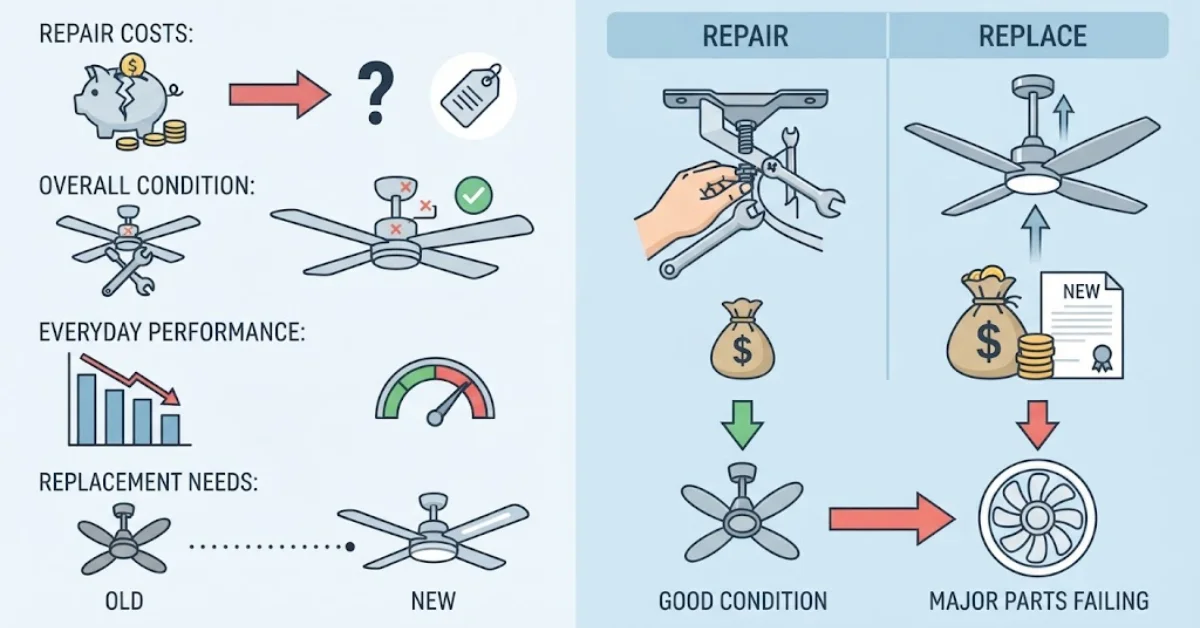
Occasional maintenance is normal, but repeated faults can become frustrating. You may find yourself arranging repairs for noise, poor performance, faulty controls or other issues within a short period.
Keep a simple record of the problems and repair work. This can help you see whether the fan is becoming less reliable and whether the cost of keeping it running still makes sense.
Consider these points before making a decision:
- Repair costs: Compare the likely cost of another repair with the price of a suitable replacement.
- Overall condition: Check whether the motor, blades, controls and mounting are still in good condition.
- Everyday performance: Think about whether the fan provides enough airflow and works reliably.
- Replacement needs: Consider whether a newer model offers useful features for your room.
A low-cost repair may be sensible when the rest of the fan is in good condition. If several major parts are failing, replacement may offer better long-term value.
For more background, read our guide to the lifespan of a ceiling fan. It can help you think about age and wear alongside the fan’s current condition.
Your Room Has Changed, but the Fan Has Not
Sometimes, a fan still works but no longer suits the room. You may have changed the furniture, updated the lighting or turned a spare room into a home office.
These changes can affect the type of fan that works best. A fan that suited an older layout may no longer provide the airflow or lighting you want.
If you need both air movement and room lighting, a ceiling light and fan combination may be worth considering. If you want a cleaner look, you could compare different blade styles and finishes. For some rooms, a remote-controlled model may also be more convenient.
Think about the room before choosing a replacement. Check the ceiling height, available space, lighting needs and intended use. The fan should suit the room rather than simply match the old unit.
If you are choosing a fan for a bedroom, our guide to the best ceiling fans for bedrooms can help you compare suitable options.
The Fan Shows Visible Wear or Damage
Look closely at the fan when it is switched off. Cracked blades, rust, damaged covers, worn finishes or loose-looking parts can be signs that the unit needs attention.
Not every cosmetic issue requires a new fan. For example, a damaged light cover may be replaceable if the rest of the unit is in good condition and compatible parts are available.
However, cracked blades, damaged blade holders or signs of deterioration around key fittings should not be ignored. Do not use a fan with damaged blades or parts that appear insecure.
If the fan is installed in a kitchen, bathroom or another area exposed to moisture, consider whether the model is suitable for that environment. The right product depends on the location and its conditions.
A licensed electrician can assess the damage and advise whether replacement parts are suitable. If the fan has several worn or damaged components, installing a new unit may be the more practical choice.
Choosing a Replacement Ceiling Fan

Once you decide to replace your fan, compare more than price and appearance. The right model should suit the room, provide suitable airflow and meet your lighting and control needs.
Keep these factors in mind:
Room size and airflow: Choose a fan designed for the size and layout of the space. A fan that is too small may not provide the comfort you expect.
Motor type: Compare AC and DC models based on energy use, available speed settings, noise and purchase cost. Our guide to AC vs DC ceiling fans explains the main differences.
Lighting: If you want a fan with a light, check its brightness, light colour options and whether replacement parts are available.
Controls: Decide whether you prefer a wall switch, pull cord or remote. Check how the control system works before buying.
Ceiling and mounting: Make sure the fan suits the ceiling height and installation location. Sloped ceilings or unusual mounting conditions may need extra planning.
Installation: Allow for the cost of professional installation, especially if wiring, switches or the mounting point need work.
A suitable replacement should meet your needs now and remain practical as your household changes.
When Should You Call an Electrician?
Contact a licensed electrician if your ceiling fan makes unusual noises, shakes heavily, has unreliable controls or shows signs of electrical trouble. A professional can check whether the problem is limited to one part or whether replacing the fan makes more sense.
In Australia, electrical installation work should be completed by a suitably licensed electrician. This is particularly important when replacing wiring, changing controls or installing a new fan where the mounting or electrical setup may need attention.
Avoid using a faulty fan while waiting for an inspection. If you notice smoke, sparks or a burning smell, stop using the unit and treat the issue as urgent.
Frequently Asked Questions
How do I know if my ceiling fan needs replacing?
Weak airflow, repeated noise, heavy wobbling, damaged parts or frequent faults may mean you need a new fan.
How long does a ceiling fan usually last?
A ceiling fan can last for many years, depending on its quality, use, maintenance and operating conditions.
Can a noisy ceiling fan be repaired?
Yes. Loose parts or unbalanced blades may be repairable. Persistent noise may need a professional inspection.
Is it better to repair or replace an old ceiling fan?
It depends on the fan’s condition and repair cost. Replacement may be more practical if major parts keep failing.
Who should install a replacement ceiling fan in Australia?
A suitably licensed electrician should handle the electrical installation and check that the fan is safely fitted.
Conclusion
A ceiling fan may need replacing when airflow drops, noise continues, the unit wobbles, controls become unreliable or visible damage appears. Electrical warning signs need prompt attention, while repeated repairs may mean a new fan is the better long-term option.
Before buying a replacement, consider the room size, airflow, lighting, controls and installation needs. A professional inspection can help you make a practical choice instead of replacing a fan that may only need a simple repair.
Vamp Electrical Solutions can help you assess your ceiling fan installation needs and plan the next step. Contact the team on 0420 102 214 to discuss your requirements.