
Your switchboard controls how electricity flows through your home. It supplies power to lights, outlets and appliances. It also houses devices that help protect your electrical system.
Over time, parts can wear out or become damaged. Your household may also need more power than your current setup can support. These changes can make switchboard repairs or an upgrade necessary.
Many homeowners only think about their switchboard when a circuit breaker trips or the power goes off. Others discover a problem when they renovate or install a new appliance.
Knowing what to look for can help you take action sooner. This guide explains common warning signs, repair options, upgrade costs and the value of professional electrical work.
Signs Your Switchboard Needs Attention
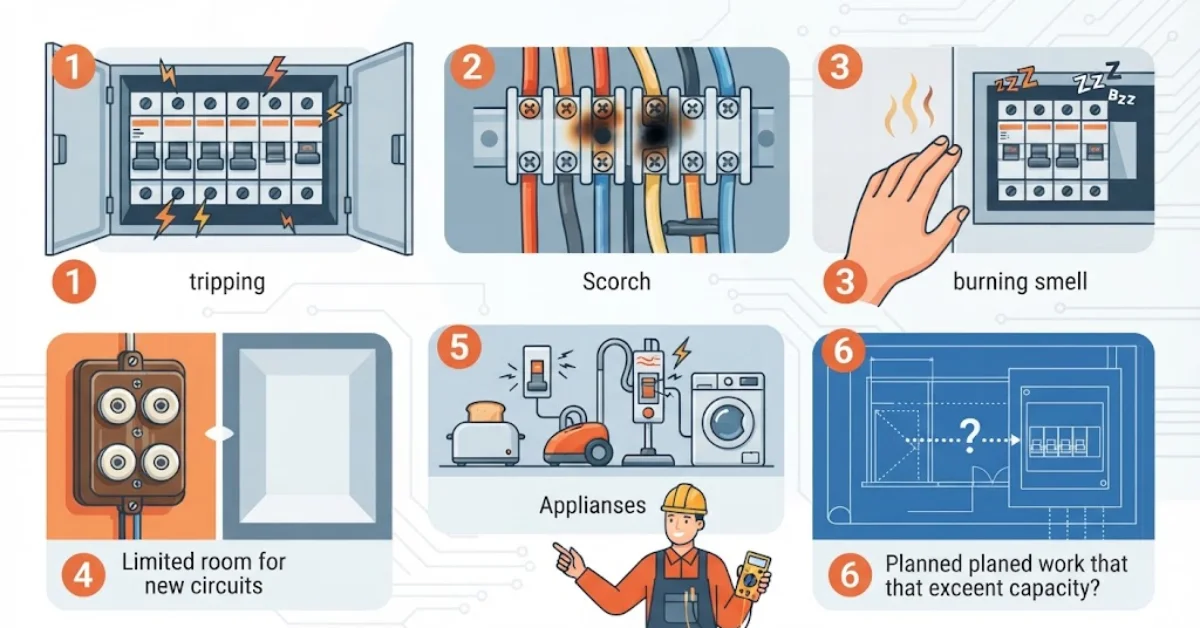
Some electrical problems need only a simple repair. Others may point to a larger issue with your switchboard or wiring.
Watch for these warning signs:
- Circuit breakers or safety switches that trip often.
- Burning smells, buzzing or scorch marks near the board.
- Visible damage or signs of overheating.
- An old fuse box with limited room for new circuits.
- Power problems when several appliances run at once.
- A switchboard that cannot support planned electrical work.
These signs do not always mean you need a new switchboard. A faulty appliance, damaged wire or overloaded circuit can also cause problems.
Age alone does not mean a board must be replaced. Its condition, safety devices and ability to meet your home’s needs all matter.
A licensed electrician can inspect the installation and find the cause. If you notice smoke, active sparking or a strong burning smell, keep away from the board. Move to safety and call emergency services if there is an immediate danger.
What Do Switchboard Repairs Involve?
Switchboard repairs aim to fix a fault and restore safe operation. The work depends on the problem and the condition of the existing equipment.
A repair may involve replacing a damaged protective device or fixing a faulty connection. A defective main switch may also need attention. The electrician must first identify the cause of the fault.
Repeated tripping is a good example. A circuit breaker may be doing its job by cutting power during an overload or short circuit. Replacing it without finding the cause may not solve the problem.
A proper inspection helps identify whether the fault comes from the board, wiring or a connected appliance. This avoids guesswork and helps ensure the right repair is carried out.
Never open a switchboard or attempt internal electrical repairs yourself. Some parts may remain live even when the main switch is off.
Switchboard Upgrades and Safety Switch Protection
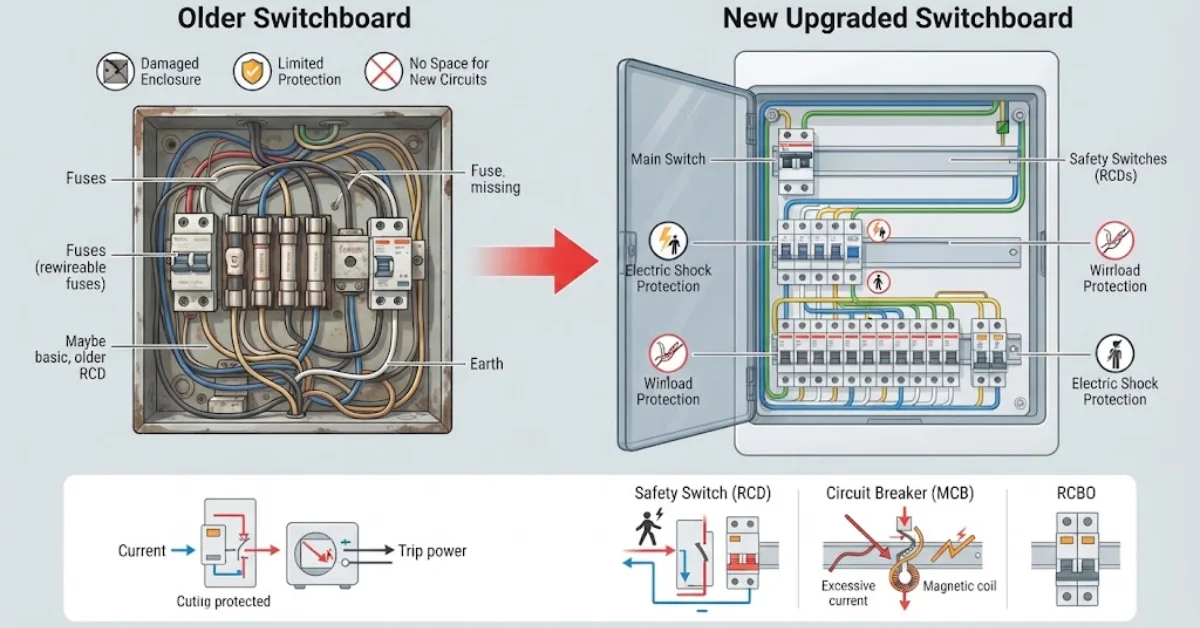
An upgrade may be needed if your switchboard is damaged, lacks suitable protection or cannot support new circuits. The work may include a new enclosure, updated safety devices or better circuit labelling.
It is important to understand the difference between a safety switch and a circuit breaker.
A safety switch detects an imbalance in electrical current and cuts power. This helps reduce the risk of electric shock.
A circuit breaker protects wiring from excessive current caused by an overload or short circuit. Both devices serve important but different purposes.
Some switchboards use RCBOs. These devices combine residual current protection and overcurrent protection for a circuit.
During an upgrade, an electrician can check which devices are already installed. They can also identify any gaps in protection and recommend suitable changes.
A new switchboard may also provide room for extra circuits. This can help when adding appliances, air conditioning or other electrical equipment. The design should match your actual needs rather than include features you may never use.
Common Electrical Problems That May Point to Switchboard Issues
Some household electrical problems may be linked to the switchboard. Others start in the wiring, fittings or appliances.
Repeated tripping can point to an overloaded circuit or a faulty appliance. A damaged wire may also cause the problem. If several circuits keep tripping, the electrician may need to inspect the wider system.
Flickering lights can have several causes. A loose lamp or faulty fitting may affect one light. If several lights dim at once, the issue may be more serious.
Buzzing, burning smells and scorch marks need prompt attention. Stop using affected equipment and arrange a professional inspection. Do not touch exposed wires or damaged fittings.
If your home has an older switchboard and ongoing electrical faults, an inspection can help identify the cause. The electrician can then decide whether a repair is enough or an upgrade is needed.
Replacing the switchboard will not fix every electrical problem. The source of the fault must be found first.
How Much Does a Switchboard Upgrade Cost?
The cost of a switchboard upgrade depends on the work required. A simple job may cost less than a full replacement with new circuits and protective devices.
There is no single price for every home. The final quote should reflect the condition of your installation and the work needed to make it safe.
Several factors can affect the price:
- Existing equipment: Replacing a faulty part differs from replacing the whole board.
- Number of circuits: More circuits may need extra devices and labour.
- Safety protection: The type and number of safety switches affect material costs.
- Wiring condition: Damaged wires or faulty circuits may need repairs.
- Access: Restricted access or extra work on the enclosure can increase labour costs.
- Future needs: New circuits or changes to the electrical supply may add to the job.
When comparing quotes, check what each price includes. Ask about equipment, labour, testing, circuit labels and required certificates. Also check whether removing the old equipment is included.
A clear quote helps you compare options and avoid unexpected costs. Do not choose a contractor on price alone. Make sure the proposed work addresses the fault and meets the relevant safety requirements.
When Older Wiring May Need More Than a Switchboard Upgrade
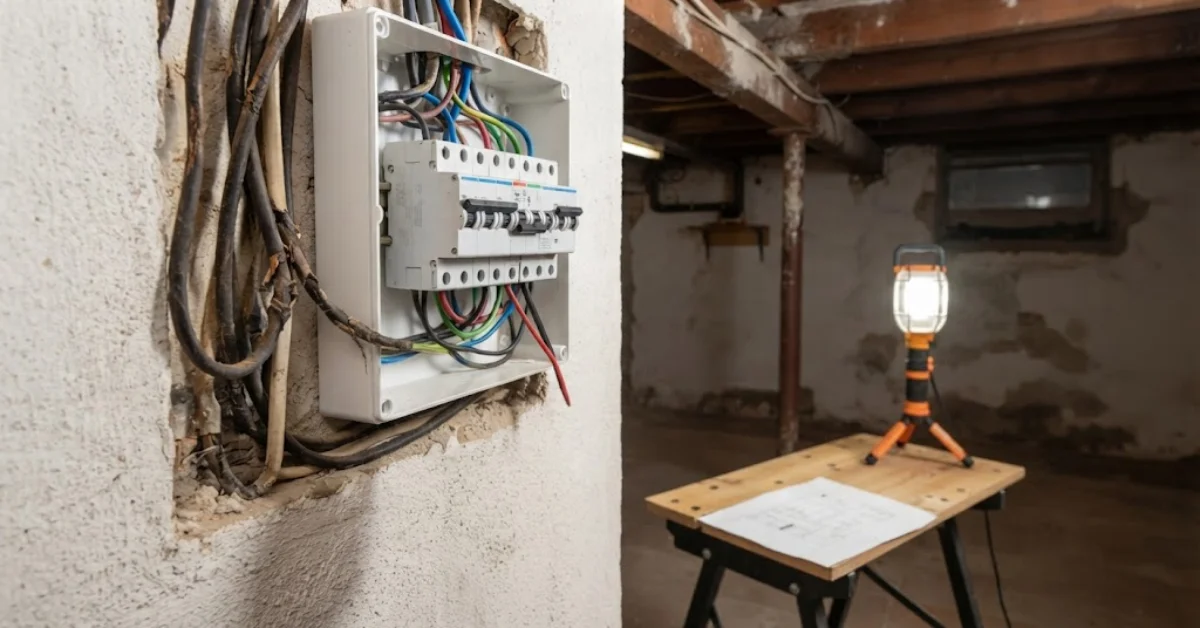
A new switchboard cannot fix damaged wiring elsewhere in your home. If wires are worn or faulty, those circuits may need repair or further inspection.
Older wiring can develop problems over time. Insulation may break down, connections may loosen, and some parts may no longer suit the home’s electrical needs.
This does not mean every older home needs a full rewire. The condition of the wiring and the type of fault will guide the next steps.
If several circuits have problems, the electrician should check more than the switchboard. This helps show whether the fault is local or affects other parts of the home.
Read our guide to the cost to rewire a house in Melbourne for more details about the factors that affect rewiring work.
Before approving major repairs, ask the electrician to explain the faults and the proposed solution. You should know why the work is needed and what it includes.
Why Hire a Licensed Electrician?
Switchboard work carries serious electrical risks. Poor connections, incorrect devices or faulty repairs can put people and property at risk.
A licensed electrician can inspect your switchboard, test for faults and explain the work required. They can also check whether the proposed changes meet Victorian electrical requirements.
This is useful when you plan a renovation or install a major appliance. An inspection can show whether your current board has enough capacity and suitable protection.
Vamp Electrical Solutions can help homeowners assess switchboard faults, repairs and upgrade needs. The right solution will depend on the condition of your installation.
Ask for a clear quote and an explanation of the work. A good assessment should identify the problem, explain the recommended fix and outline any extra work that may be needed.
Frequently Asked Questions
How do I know if my switchboard needs an upgrade?
Warning signs include repeated tripping, visible damage, outdated equipment or a lack of suitable safety protection. An electrician can check whether you need repairs or a new board.
Can an electrician repair an old switchboard?
Yes. A repair may be suitable if the fault is limited and the board remains safe to use. A damaged or unsuitable board may need replacement.
Why does my circuit breaker keep tripping?
Common causes include an overloaded circuit, a faulty appliance or damaged wiring. An electrician can test the circuit and find the cause.
Does an old switchboard always need replacing?
No. Age alone does not mean replacement is necessary. The condition of the equipment and the protection it provides are more important.
How much does a switchboard upgrade cost?
The price depends on the board, number of circuits, safety devices and any extra repairs. Ask for a quote based on your home’s electrical setup.
Is a safety switch the same as a circuit breaker?
No. A safety switch helps protect people from electric shock. A circuit breaker protects wiring against overloads and short circuits.
Conclusion
Your switchboard plays an important role in your home’s electrical safety. When problems occur, the right fix depends on the cause. Some faults need a repair, while others call for an upgrade.
Do not ignore repeated tripping, burning smells, buzzing or visible damage. A professional inspection can help find the problem and explain the next steps.
For help with switchboard upgrades and repairs, contact Vamp Electrical Solutions on 0420 102 214 to discuss your needs and arrange an assessment.