
A circuit breaker helps keep your home safe. It stops the flow of power when a circuit has too much load or develops a fault. This helps protect your wiring and electrical equipment.
But what happens when a breaker keeps tripping or will not reset? These signs may point to a fault that needs attention. Ignoring the problem can put your home and family at risk.
Circuit breaker replacement is not a job to do yourself. A switchboard has parts that can carry dangerous power. One wrong move can cause an electric shock, damage, or fire.
Knowing the warning signs can help you act early. A qualified electrician can check the problem, find the cause, and fit the right replacement if needed.
In this article, we explain how breakers work, when they need attention, and why professional help matters.
What Does a Circuit Breaker Do?
A circuit breaker is a safety device in your home’s switchboard. It cuts power when a circuit has too much current or a fault.
This helps stop wires from getting too hot. It also helps protect your appliances and other electrical parts.
Understanding circuit breaker basics can help you spot problems early.
A breaker mainly responds to two types of faults:
- Overload: This happens when too many appliances draw power from one circuit. The load becomes too high, so the breaker trips.
- Short circuit: This happens when electricity takes an unsafe path. Damaged wires or faulty equipment can cause this problem.
Once the fault is found and fixed, many breakers can be reset. However, a breaker that keeps tripping needs a proper check.
A breaker cannot fix every electrical problem. Faulty wiring, loose connections, and damaged appliances may also need repair.
Signs Your Circuit Breaker Needs Attention
A faulty breaker may show warning signs before it stops working. Knowing what to look for can help you avoid bigger problems.
Frequent Tripping
Does your breaker trip again and again? This may point to an overload, a short circuit, or a faulty appliance.
If the problem keeps coming back, arrange an electrical check.
Burning Smell
A burning smell near the switchboard can be a sign of overheating. It may come from damaged wires or loose parts.
Stay away from the switchboard and seek urgent electrical help. If you see smoke or fire, leave the area and call emergency services.
Breaker Will Not Reset
A breaker should stay in the ON position when the fault has been fixed. If it will not reset, there may still be a problem.
Do not force the switch. Ask an electrician to check it.
Visible Damage
Cracks, dark marks, or melted plastic are signs of damage. These can point to heat or an electrical fault.
Do not touch the damaged part. Arrange a professional inspection.
Sudden Power Loss
If lights or power points stop working, the circuit may have a fault. The cause could be the breaker, wiring, or an appliance.
A proper check can help find the source.
Safety Switch vs Circuit Breaker: What’s the Difference?
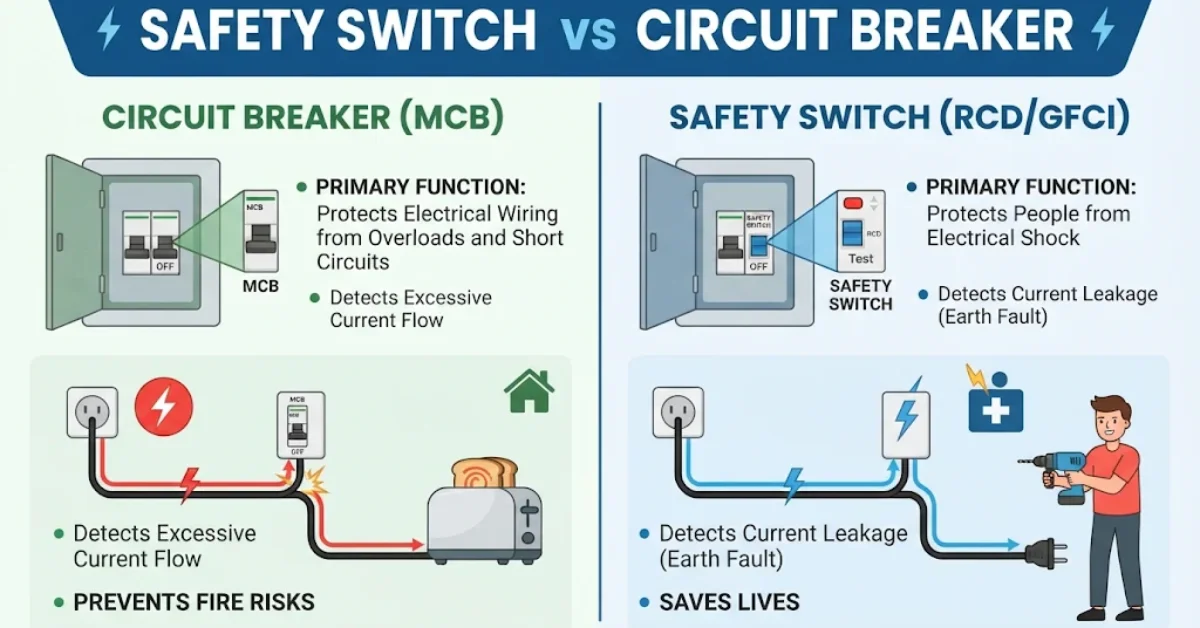
A safety switch and a circuit breaker both help protect your home. But they do different jobs.
A circuit breaker protects electrical wiring from too much current. It trips when there is an overload or short circuit.
A safety switch helps protect people from electric shock. It cuts power when it detects current leaking from the circuit.
Here is a simple comparison:
- Circuit breaker: Protects wiring from overloads and short circuits.
- Safety switch: Detects current leakage and helps reduce the risk of electric shock.
Your switchboard may have both devices. They work together to provide better protection.
If either device trips often, do not ignore it. The cause may be a fault in your wiring or an appliance.
An electrician can test both devices and check that they work as they should.
Circuit Breaker vs Fuse: Which One Is Better?
A fuse and a circuit breaker both help protect electrical circuits. They stop the flow of power when current becomes too high.
The main difference is how they work.
A fuse has a thin metal part that melts when too much current flows through it. Once it blows, it must be replaced.
A circuit breaker uses a switching system. It trips when it detects an overload or short circuit. After the fault is fixed, it can often be reset.
Both devices must have the right rating for the circuit they protect.
Many modern homes use circuit breakers because they can be reset after a fault. However, the right choice depends on the electrical system and its design.
If your home has an older switchboard, an electrician can check its condition and advise whether an upgrade is needed.
Power Out at Home? What to Check First
A sudden loss of power can be frustrating. But it does not always mean your circuit breaker is faulty.
Before calling an electrician, you can make a few safe checks.
- Check the outage area: See whether the power is off in one room or across the whole home.
- Check for a local outage: Your electricity provider may have reported an outage in your area.
- Think about recent use: A new appliance or too many devices may have caused an overload.
- Look for warning signs: Burning smells, smoke, heat, or visible damage need urgent attention.
Do not open the switchboard or touch damaged wires. Do not keep resetting a breaker that trips again.
If the cause is not clear, contact an electrician. They can test the system and find the fault.
Why Circuit Breaker Replacement Is Not a DIY Job
Replacing a breaker may look like a simple task. But switchboards contain parts that can carry dangerous power.
Turning off the main switch does not always make every part safe. A person without the right training may not know which parts remain live.
Here are some key risks.
Risk of Electric Shock
Contact with live parts can cause severe injury or death. Safe electrical work needs the right training, tools, and testing methods.
Wrong Breaker Selection
Not every breaker suits every circuit. Its rating and type must match the wiring and switchboard.
A wrong choice may leave the circuit without proper protection.
Hidden Electrical Faults
A breaker may trip because of a fault elsewhere. Simply fitting a new one will not fix damaged wiring or a faulty appliance.
The real cause must be found first.
Fire and Equipment Damage
Loose connections and poor fitting can create heat. This may damage the switchboard and increase the risk of fire.
A qualified electrician can inspect the system and carry out the work safely.
When Should You Call a Circuit Breaker Electrician?
Some electrical problems need prompt attention. Do not wait for a breaker to fail before asking for help.
Call a circuit breaker electrician if:
- Your breaker trips again and again.
- The switch will not stay in the ON position.
- You notice a burning smell near the switchboard.
- You see cracks, melted plastic, or dark marks.
- Your lights or power points keep losing power.
- Your switchboard has old or damaged parts.
An electrician can test the circuit and find the cause. They can also check whether the breaker needs replacement or if another repair is needed.
If you are searching for an Electrician Near Me, check that the person holds the right licence and has experience with switchboard work.
What Happens During Circuit Breaker Replacement?
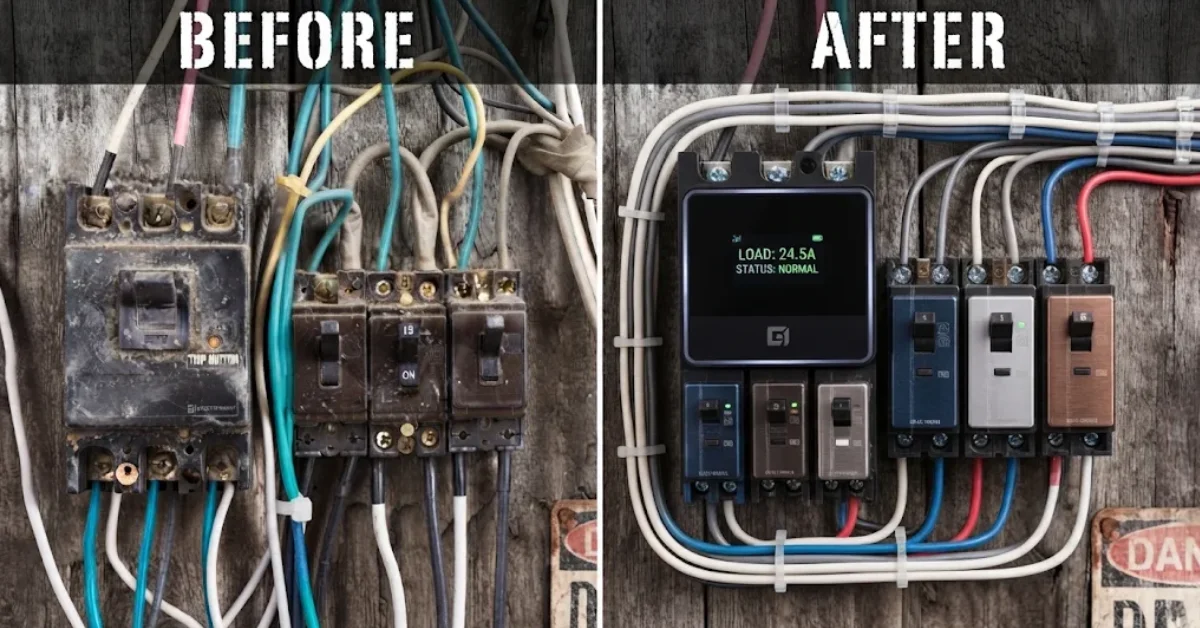
Professional replacement starts with an inspection. The electrician first checks the switchboard and looks for signs of damage.
The work usually follows these steps.
Step 1: Inspect the Switchboard
The electrician checks the breaker, wiring, and nearby parts. They look for heat damage, loose connections, and other signs of a fault.
Step 2: Find the Cause
Testing helps show why the breaker keeps tripping or has stopped working.
This step matters because the problem may not be the breaker itself.
Step 3: Choose the Right Replacement
The electrician checks the circuit rating and switchboard design. They then select a suitable replacement.
The new unit must be safe and compatible with the system.
Step 4: Fit and Test the Breaker
The electrician makes the work area safe before replacing the faulty part.
After fitting the new unit, they test the circuit to check that it works as intended.
Step 5: Complete Safety Checks
The final checks help confirm that the work meets the relevant Australian electrical rules.
This process helps reduce the risk of repeat faults.
Choosing the Right Circuit Breaker for Your Home
Choosing a new breaker is not just about finding one that fits. It must match the circuit and provide the right level of protection.
A few things need to be checked.
Current Rating: The breaker must suit the wiring and the load on the circuit.
Breaker Type: Different circuit breaker switches have different uses. The right type depends on the electrical system.
Switchboard Fit: The replacement must be suitable for the existing switchboard.
Fault Rating: The breaker must be able to handle the fault current at the point where it is installed.
Product Quality: A circuit breaker manufacturer should provide products that meet the required standards and suit the intended use.
A circuit breaker distributor may offer many models. However, the right product should be chosen after checking the system.
For larger electrical systems, air circuit breaker trip settings may also need review. These settings affect how the device responds to faults.
Only a qualified person with the right training should assess or adjust them.
Professional Circuit Breaker Services
A safe switchboard is important for every home and business. When a breaker fails, the right repair can help protect the whole electrical system.
Vamp Electrical Solutions provides electrical services in Melbourne. The team can help property owners with electrical faults and switchboard concerns.
Professional circuit breaker services may include:
- Breaker inspection and replacement.
- Switchboard checks and upgrades.
- Electrical fault finding.
- Overload and short-circuit checks.
- Breaker selection and testing.
- Electrical safety inspections.
If you need to replace a circuit breaker switch, the first step is to find out why the old one failed.
A professional check helps ensure the repair suits your electrical system. It can also help find other problems before they become more serious.
Frequently Asked Questions
How do I know if my circuit breaker needs replacing?
Frequent trips, burning smells, visible damage, or failure to reset can point to a faulty breaker. An electrician can test it and confirm the cause.
Can I replace a circuit breaker myself?
No. Switchboards can contain live electrical parts. Breaker replacement should be done by an appropriately licensed electrician.
Why does my circuit breaker keep tripping?
Common causes include too many appliances, damaged wiring, short circuits, or faulty equipment. An electrician can find the exact cause.
How long does circuit breaker replacement take?
The time depends on the switchboard and the fault. A simple replacement may take less time than a job that needs extra repairs.
Should I replace an old circuit breaker?
Not every old breaker needs replacing. But damaged or unreliable units should be checked by an electrician.
What should I do if my breaker smells like burning?
Stay away from the switchboard. Do not touch or reset the breaker. Arrange urgent electrical help. If there is smoke or fire, leave and call emergency services.
Does a new circuit breaker fix every electrical problem?
No. The fault may come from wiring, appliances, or an overloaded circuit. These problems need to be found and fixed too.
Conclusion
A faulty circuit breaker can put your home at risk. Frequent trips, burning smells, and damaged parts should never be ignored.
Do not try to replace a breaker yourself. The wrong repair can cause electric shock, damage, or fire. A qualified electrician can find the fault, choose the right part, and test the system after the work.
For professional electrical help, contact Vamp Electrical Solutions. Call 0420 102 214 to discuss your switchboard problem and arrange an inspection.